


THE SONG THAT LETS SORROW TELL THE TRUTH
Peter Rosenberger
Last month, another family requested I play "It Is Well with My Soul" for their loved one’s funeral.
After nearly 50 years of playing the piano for funeral services, I've lost count of how many times I've played that hymn.
Those years at the piano have provided an unusual vantage point. Most people attending a funeral spend the service looking toward the front of the sanctuary or chapel. They see the pastor, the flowers, the family, and the casket. Sitting at the piano, however, I've spent much of my life looking in the opposite direction.
I see the faces. I've watched businessmen, ranchers, physicians, pastors, politicians, mechanics, celebrities, schoolteachers, and grieving children. I've seen estranged family members share a pew for an hour. I've seen old wounds temporarily set aside. I've watched tears fall from people who spent a lifetime convincing the world they didn't cry.
It's hard to lie during a funeral service. The face and eyes give it away.
For a brief moment, the distractions of life are suspended in the face of death. Everyone in the room is confronted with the same reality: Life is fragile, time is limited, and something had the final word over a life that may have loomed very large only days before.
When I offer to help select the music, I often ask the family’s favorite hymn. “It Is Well with My Soul” almost invariably stands out.
This year marks 150 years since Philip Bliss set Horatio Spafford's words to music. Ever since, grieving families have continued reaching for that hymn.
After hearing it and performing it for a lifetime, I've become convinced that something happens in the fifth measure where the word "sorrows" lands on the first minor chord of the hymn.
I leave room for that chord.
When I play the hymn, I take my time. I've had music ministers try to conduct me faster through it. I politely ignore them. Grief does not benefit from haste.
Not because I am trying to showcase the music, but because I have watched what happens in the room when people hear it. Heads lower. Shoulders sag. Eyes fill with tears. In that moment, the hymn permits grieving people to tell the truth.
The sea billows are rolling.
Sometimes, when I invite the congregation to sing, I watch people exhale. Some simply mouth the words. Others sing through tears. Some stand motionless and stare straight ahead. I've watched grieving fathers, mothers, and spouses raise their hands heavenward as tears run down their faces.
Occasionally, I stop playing altogether on the last chorus and let the congregation carry the hymn themselves. There is something profound about hearing a room full of grieving people give collective grief a collective voice.
The hymn was written from within great sorrow. It never hurries people through it. It doesn't offer clichés or pretend pain isn't pain.
It acknowledges sorrow while refusing to grant it the final word.
Then comes the line that has occupied my thoughts more than any other: “Whatever my lot, Thou hast taught me to say ...”
Taught me.
The sorrows like sea billows are a given. They arrive for all of us eventually. The question is not whether suffering comes. The question is what we have been taught to do when it arrives.
What do we reach for when things around us feel so unsteady?
I've played this hymn for people who sang it with confidence and for people who could barely get the words out. I've watched some sing it as testimony and others sing it as prayer. Some seemed to embody it. Others seemed to aspire to it.
Yet, the requests keep arriving.
After nearly 50 years at the piano bench, I've never lost my sense of wonder at what happens when a room full of grieving people stand together and sing: It is well with my soul.
THOU ART MY SON
By Bill Britton
Jesus came up out of the water, dripping wet, the river water mingling with the tears that ran down His face. And how He prayed! Those pious country folk, standing on the river bank along with the well dressed religious leaders from Jerusalem could not remember when they had heard a prayer like this young man prayed as He stood there in the water with John the Baptist.
Then a strange thing happened to Jesus. (Luke 3:21-22) As Jesus prayed, the heaven was opened, and the Holy Ghost descended in a bodily shape like a dove upon him, and a voice came from heaven, which said, "Thou art my beloved Son in Thee I am well pleased".
Have you never wondered WHY the voice spoke directly to Him, informing Him of His Sonship? Did it ever occur to you that God was bringing forth a milestone in the earthly life of Jesus of Nazareth. Nothing happened by accident in the life of Jesus. Every detail was ordained before the foundation of the world. This was a momentous day in His life, and great things were happening in Heaven and earth. This was .... in fact, the great day of
THE ADOPTION
For thirty years Jesus had been in subjection, in His immaturity. For years he had been growing, physically, mentally, and spiritually, waiting for this day of Adoption, or "placing as a full grown mature Son. " Galatians, chapter 4, tells how that the heir, (though he is Lord of all) still has to be treated as a servant and others in the household while he is a child, in his immaturity. So it was that Jesus, in fulfilling the pattern for His Body, had to go through the same process. And it was in reality, not a hypocritical sham or token. This all actually took place, and were very real events in the life of our Lord.
A Jewish lad, the firstborn of his father, was tenderly cared for and watched over - not only by his father, but by all the servants as well. For they knew that this one would someday inherit all his father's possessions and become their master. But in this care there was involved a discipline. The child was not given all his father's authority, nor was he allowed to have his own way or choose his own course. He learned to do as he was told, to be obedient even to those of less stature than he was to be. CLARKE'S COMMENTARY has this to say of Gal. 1:1 .... "Though he be appointed by his father's will, heir of all his possessions, yet till he arrive at the legal age he is master of nothing and does not differ from one of the common domestics.
THE MANGER WAS REAL
The great humility of our Lord Jesus was marked by the manger in which He laid as a babe. It was no accident. It was all part of the pattern, and was very real. He was just a tiny baby born of a simple peasant girl, amid the smells and noise of a barnfull of animals. He did not lie there in robes of diety, thinking of all the ramifications of this great Plan of the Ages that was being brought forth at this time. No, beloved, all this had been stripped before He left the portals of glory. He is now clothed in the humiliating garments of His humanity. He thinks of nothing that any other baby would not think of. He was a very real baby. He does not have the intelligence to save Himself from Herod's fury, but is completely dependent upon God. In fact, speaking prophetically through the Psalmist in Psalms 22 of this very time, He said to the Father: "Thou keptest me in safety when I was upon my mother's breasts. "This takes nothing away from the glory that belongs to our Jesus. It only adds to the luster of His brightness to realize the Depths to which He went to redeem us and give us a pattern of Sonship. His humility was real and honest. His discipline was as stern and Strict as any Jewish boy. Hebrews 5:8 says "Though He were a Son,......yet learned He obedience by the things which He suffered," or by the discipline which He endured.
HE GREW IN OBSCURITY
Except for the lack of sin and the Adamic nature, and except that He was born of God and was diety being manifested in human flesh, the boy Jesus was just the same as any other boy. His young mind hungered for knowledge, and He daily learned more about God's Word and the promise of a coming deliverer, a Messiah. He was a strange one all right, to the world, for He did not have a complaining, grumbling nature, and He joyfully and obediently fulfilled His duties and tasks as instructed by those to whom He was subject. He was an example, a pattern, of what God's intentions were for children of this human race. He was the firstborn of a new creation, a new race of people, a people free from the corrupting influences of this Adamic nature. He was the sign of our inheritance!
He did not grow with a great sensational fanfare. Movies were not made, nor was a diary kept of his every word and action as a boy. He was just a boy. In submission. Being taught, and disciplined. Can God grow ? Who can teach the Almighty ? Yet this boy grew, and has taught. In His immaturity the heir was no different than the servant, tho He be Lord of all! Born from above, seed of the Father, yet walking in humility. Not knowing fully who He was, but a growing consciousness that He was a child of destiny. Then the day of Adoption, in Jordan's muddy waters, when the Father spoke to Him. "Thou art my beloved Son". So this is why He is different. Placed as a mature Son. Ready to take His place alongside His Father in the work of redeeming mankind. Along with this voice came an appearance. He saw the Holy Ghost in a bodily shape. This was the first time He had, in His flesh, seen God. And the Spirit descended upon Him, and remained. There was an anointing that came upon Him, above and beyond anything that humans have ever experienced as yet. All this was because He was
A PATTERN FOR US
I feel the tug in my heart to go to the River Jordan. It is something I cannot explain in words that make sense to the ordinary Christian. It is just that I know that God is drawing me to a place of laying down my life, my self nature. This is something that is true of all those who are called into this High Calling of God, to be conformed to the image of the Son of God. Jordan represents death, in baptism there is a burial of all that remains of the self life. In the coming up out from the water there is a resurrection into His divine life. The Word of God is clear. I know I shall see Him, and shall hear His voice declaring our Sonship. I hunger for the fulness of the inheritance, the anointing of the Spirit without measure. This, too, came at Jordan.
A BODY FOR GOD
At Jordan Jesus laid down His own life and gave Himself into the hands of the Father in such a way that He became a vehicle of expression for God. God may reveal His might and power in the hurricane or the lightning. He might express His creative ability in the physical universe. But only in Jesus, His Son, could He truly reveal and express His own divine nature. So the Son, as a human laid down His own rights, His own thoughts, His own will, and became a visible means of expressing that which was divine, that which was invisible. Now man can see what God is really like. He has one to truly represent Him, one to express His love and compassion and wisdom and humility, as well as His authority and dominion in heaven and earth. Here He has one like Himself, in His own Image, and He is publicly placing Him as His Son.
A BODY FOR CHRIST
The true nature of Jesus must be manifested to the world. To them He is invisible, they will not read the Bible to learn about Him. Their thoughts are continually on other things. But He seeks a Body in which He can eternally express His own Nature. They are very close to His heart. He is wooing them, drawing them, bringing them to a place of laying down their own lives and partaking of His divine nature. For you see, this Body is a corporate body, it is made up of a multitude of chosen saints. Those willing to come into His own Image. This is a difficult road. For you cannot take your old life or self into this. You must become a vehicle of expression for the living Christ. Many today are willing for God to give them power and anointing and authority so that they Night express their owls desires and ambitions. Many are willing to sacrifice greatly in order to bring their own ministries to a place of great prominence.
But this is not the case with the Body. This is a laying down of our own lives, that we might manifest the life of Jesus in this mortal flesh.
OUR IMMATURITY
We are now in a time of discipline, child training, Learning. Learning obedience, and humility, Growing in obscurity, not even knowing ourselves, the full extent of our growth, or how near mature. Forget those who boast of their maturity, who tell of their Manifested Sonship. They are impostors, voices of the flesh. Acts 5:37, tells us that at the very time that the Baby Jesus was lying in the manger, immature and helpless, there was another from Galilee who thought that he was the deliverer and persuaded much people to follow him. He perished, and his followers were dispersed, having missed the reality of what was hidden in the womb of that little virgin of Galilee. They had not heard the voice of the angel, as did Salary, nor were they overshadowed by the awesome presence of God. So they were deceived when one came offering sonship without the Cross. Those who are coming into true Sonship will not have to announce their arrival. The Father will speak with a voice "from the excellent glory, This is my beloved Son, in whom I am well pleased," (II Peter 1:17). The day of Adoption is surely coming. Be patient, children, grow in God, and then let Him speak for you.
THE ANOINTING ABIDES
"Upon whom thou shalt see the Spirit descending, and remaining on him .... " (John 1:33) This was the word that came to John the Baptist as to how He would know the Christ when He came. The Spirit anointed and used other men. But where the Spirit came upon Jesus, it remained. Because He was the Pattern for a body that shall dwell under an anointing that abides. The anointing of the Baptism in the Holy Ghost is a glorious experience. It is the firstfruits of what comes upon the Body. But it is only the firstfruits, and God never intended for us to be satisfied with the firstfruits. Israel came to Kadesh-Barnea, on the edge of Canaan. From there they sent in twelve spies to spy out the land Numbers 13:20 tells us that it was "the time of the first ripe grapes". And they brought back a sample. It was good, yes, very delicious. But it was only a sample of the first ripe grapes, and God did not intend for them to subsist the rest of their lives on these samples of the firstfruits. They were toga in and possess the land. Make a permanent thing of these fine vineyards and harvests. God's desire is for you to have the very best, not a sample.
UPON THE BEARD
"It is like the precious ointment upon the head, that ran down upon the beard, even Aaron's beard: that went down to the skirts of his garments". (Psalms 133:2). Here is a description of the anointing of the High Priest, with emphasis on the precious ointment. Notice .. . the same ointment not a different or cheaper kind, but the same ointment that came first upon the Head, ran down over the entire Body. Glory to Jesus! What a promise! Jesus, our High Priest, and Head of this priestly company, was anointed of the Spirit without measure. He had wisdom, understanding, discernment, as well as authority and dominion over the works of Satan never before experienced by mankind. He was anointed with a precious ointment. But God is not using a cheaper kind on the rest of the Body. The same divine anointing of the fulness of the Spirit that came upon Jesus shall come upon the entire Body, until every enemy shall become His footstool.
This anointing does not come upon babes in Christ, as does the Baptism in the Spirit, for the "beard" speaks of a full grown mature Son. This anointing comes at the time of the Adoption, -- at our Jordan. Gifts are given to God's children who are willing to receive .... on His terms. And God's gifts are surely wonderful, no doubt about that. But this anointing that we are speaking of is not in the "gift" realm For gifts are in part whether they be revelation gifts such as Knowledge or speaking gifts such as Prophecy. But that which is in part shall be done away with. When? When that which is perfect is come. Not when we go to heaven, but when that which is perfect comes to us here. And come it shall! Nothing shall hinder, for it is in the eternal purposes of God. Jesus, the Pattern has established it, and He cannot fail.
HE SHALL APPEAR
With the complete death to our own self-life and our own wills at Jordan comes the Adoption and an appearance of our God. For He shall appear unto His own and confirm to their own hearts this eternal relationship unto Himself. The Amplified New Testament says in Heb. 9:28 " Christ. . . will appear a second time, not carrying any burden of sin nor to deal with sin, but to bring to full salvation those who are eagerly, constantly, and patiently waiting for and expecting Him. " At His appearance there shall come a FULL salvation, a complete deliverance from every earthly bondage and demon oppression.
Some are saying that He has already appeared to them. In spirit. They have seen Him by faith. But this is not enough. Notice that Jesus saw the Holy Ghost "in a bodily shape". He physically, literally, actually saw something. Beloved, we are dealing with realities; not fantasies. It will take reality to deliver this world from the bondage of death and corruption. And this is the task reserved for the full grown Son. The world wants, and needs, reality. Strife, hatred, war on every side. They need something that will give them peace. Something that they can see has changed your life.
MINISTRY OF LIFE
From the Adoption at Jordan, Jesus entered a ministry for three and a half years that destroyed the powers of hell, and shook this world to its very foundations. He is the Pattern. Looking unto Him, we see our course set before us. "Be of good cheer," He said, "I have overcome the world."
Can you feel the tug of the Spirit pulling you to Jordan? Are you willing to go beneath the chilly waters, to die to all of your own ways? Consider carefully, for there is no turning back.
IN THE FULNESS OF TIME
Galatians 4:4 indicates clearly that there was a time element involved in the appearing of Jesus at the River Jordan. He could not decide to go at His own whim, or when He thought He might be ready. "God sent forth His Son. . . " This shows plainly the will of the Father in the time chosen for the Adoption. So it is today.: There are those who tell us it is unbelief to wait on God for this, that we must press our way into it by faith. And we are surely pressing toward the mark. But the fulness of God's plan will only come in the fulness of God's time. Be of good cheer, He is not late!
A PROPHETIC MINISTRY
There is a prophetic ministry, speaking at the mouth of the Lord, calling for a deep rooted repentance. This ministry is laying bare the secrets of our heart, and laying the axe at the root of the tree. As Jesus submitted Himself to John, so must we come to a place of submission in this hour, that we might taste the glorious fruits of full victory. Press in, saints of God, there is much yet ahead! We are just getting ready to come out of our immaturity. Sonship, full sonship, is God's plan for the mighty Body of Christ. Lift up your voice and praise Him that He has counted you worthy, and expect to hear His voice saying unto YOU .. . "Thou art my beloved Son, in thee I am well pleased!
Excerpts from JESUS, THE PATTERN SON
A LESSON THAT MAKES LIFE EASY AND SIMPLE
James Russell Miller (1840 – 1912)
Deuteronomy 33:25 As your days – so shall your strength be!
We have nothing to do with the nearest of the days before us – tomorrow. Our sole business is with the one little day which is now passing. Its burdens will not crush us – we can easily carry them until the sun goes down. We can always get along for one short day – it is the projection of life into the long future, which dismays and appalls us.
Each day is, in a certain sense, a complete life by itself. It has its own duties, its own trials, its own burdens, and its own needs. We should put all our thought, energy and skill into the duty of each day, wasting no strength, either in grieving over yesterday’s failures – or in anxiety about tomorrow’s responsibilities. This lesson makes life easy and simple!
Matthew 6:34 Therefore do not worry about tomorrow, for tomorrow will worry about itself. Each day has enough trouble of its own
THE HEART OF OUR CREATOR IS MOST WONDERFULLY KIND
by Fredrik Homer Robison (1885-1932)
Men make God’s love too narrow by false limits of their own, and they magnify His justice with a zeal He will not own. For the love of God is broader than the measure of man’s mind; and the heart of our Creator is most wonderfully kind.
Humanity has always struggled to believe in the full depth of divine love. We tend to project our own limitations onto God. Human love often fails, becomes exhausted, withdraws, or turns bitter. Because of this, people frequently imagine that God’s love operates the same way.
But Scripture consistently presents a love far beyond human calculation. God loved the world while it was still estranged. Christ died for sinners, enemies and the ungodly. Divine grace was not a response to human worthiness but an expression of God’s own nature.
The problem is not that God’s love is too small. The problem is that our vision of Him often is.
The more deeply that we realize the kindness of God, the more that fear begins to lose its power. We stop living as though acceptance must be earned. We begin resting in the reality that His purpose is driven by love from beginning to end.
The heart of our Creator truly is most wonderfully kind.
A HEART FOR THE KINGDOM OF GOD
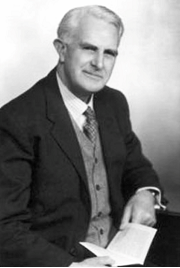
Austin Sparks
"Do you understand all these things?" "Yes," they said, "we do." Then He added, "Every teacher of religious law who becomes a disciple in the Kingdom of Heaven is like a homeowner who brings from his storeroom new gems of truth as well as old." (Matthew 13:51,52
Have you got a heart for the Lord? Have you got a heart for the Kingdom of God? Really, is this a heart matter? The Lord says that if you really have a heart, that is going to mean spiritual understanding.... There are people whose good hearts are not rebellious to the Lord. They are not the people who say, "I will not have the Lord's Words." They make a response to the Lord, and it comes from their hearts. But some good people have reservations. Some very good people say, "Now if I go all out for the Lord, you know what my friends will think of me? Do you know what the people in my church would say about me? And you know, perhaps my position in business will be interfered with. I must be very careful. I must not lose my influence with others. I must think about what other people will think and say. Now, my committee expects this of me. If I really go all out for the Lord, my committee will be very angry. Perhaps they will ask me to resign." Do you see what I mean? Very good people, but they are influenced by policy. I was talking to a man once, and as I talked to him, he saw what I was meaning. And when I was finished, this is what he said. "Yes, Mr. Sparks, you are quite right. I quite agree with you. But if I was to go the way that you are going, I should offend all my friends. And in my work for the Lord, people would begin to withdraw their support with money. So I must think about my people and about the Lord's work." Very good people, very devoted to the Lord. There is no doubt about it that they love the Lord, but you see these reservations. It says about Caleb of the Old Testament, that he had another spirit, and he wholly followed the Lord....
I say to you: have you understood all these things? I have much more to say to you about spiritual understanding. But, oh, how important it is that I should have eyes to see, to see behind the things that are said and done, and see the meaning of the Lord. These people only heard His Words, and saw His works, but they did not understand the meaning. And they lost so much. Ask the Lord to give you spiritual understanding. And if you don't understand, don't say, "I don't understand." Go to the Lord and say, "Lord, make me understand. Open the eyes of my heart." That will show that you mean business with the Lord, and if you mean business with the Lord, the Lord will mean business with you.
God Is Love
A.E. Knoch
We are never told that God is justice, or God is power, or God is wisdom. These are His attributes, not His essence.
The distinction is of vital import in the conflicting maze of reasoning concerning God’s ways and words. Justice and power and wisdom are relative, but love is absolute. He is never so just as when He justifies the unjust, for that is in line with His love. He is never so strong as when His weakness overpowers human strength, for that links it to love. He is never so wise as when His foolishness confounds the wisdom of men, for that glorifies love.
All of His attributes appear and withdraw at the beck of love. All serve it and never go counter to its commands. We cannot reason that God will do thus and so because He is just, or strong or wise. Love may not give leave. But we can safely lay our heads on the bosom of His love and there learn the great lesson that He is love, and has both the power and wisdom to carry out the dictates of His affection. What clearer proof can be given that all that He has done and is doing is leading up to that grand ultimate when He will be All in all, and love will rest in being loved?
By Chip Brogden
“There is no fear in love, but perfect love casts out fear. For fear has to do with punishment, and whoever fears has not been perfected in love” (I Jn 4:18).
Most of our fears are a consequence of not knowing God well enough. Fear comes from uncertainty. If we are confident, secure, and certain about who we are in Christ, and who Christ is in us, then we won’t be worried about what the devil might do, and we won’t be worried about what other people might do.
Now folks, that’s a lot off your plate. Imagine what a relief it would be to just live your life in friendship with God, unaffected by worries and fears about the devil, unmoved by worries and fears about other people – what they might think, what they might say, what they might do.
Think about all you could accomplish if you were truly unafraid. I’m not saying you go out and take foolish risks. I’m saying fear holds us back. God tells us to go but we’re afraid to go. God tells us to stay put but we’re afraid to stay put. God gives us something to say but we’re afraid to say it. God gives us a talent or a gift that will bless and encourage and help other people, but we’re afraid we’ll make a mistake, or afraid we’ll look foolish, or afraid we might fail.
Let me go ahead and allay those fears right now. Let me share something with you that will set you free from fear of failure, fear of making mistakes. I’m still relatively young, but I’ve been at this for a long time. People say, “How can you know so much and be so young?” I’ll tell you why, it’s because I’ve made enough mistakes for three people twice my age. By the time I was twenty I had made enough mistakes for someone eighty. I have failed more times than I have succeeded. I have fallen down, gotten up, fallen down, gotten up, fallen down, gotten up, and sometimes I think God created me to be an example to others of what NOT to do. I’m only just beginning to experience some victories, some successes, some fruitfulness. I’ve had to learn it the hard way.
But here’s what I want to share with you, to set you free from fear of failure, fear of making mistakes, fear of stepping out, fear of stepping up. Here’s what God showed me: His plan, and His purpose for my life, is based on my making lots of mistakes. His plan accounts for the fact that I’m going to fail. He already has that factored into the equation. We don’t take God by surprise, or derail His purpose, by anything we do or fail to do. His purpose and His plan for your life is not dependent on you never making a mistake. Not only does He know that you will make mistakes, and you will fail, He makes His plans based on the fact that things are going to come along to try and mess up His plans.
Have you ever made plans to do something? Do you plan for things to go wrong, or do you plan for things to go right? Most people come up with a plan and the plan assumes everything is going to go the way it should. But what happens? Something always goes wrong, and then the plan collapses.
For me it happens every Saturday. My wife gives me a little home repair project, and I think it’s going to be pretty simple, just need a hammer and some nails and this and that. So I plan to take five minutes to do this simple repair. Then I get five minutes into the project and realize it’s worse than I thought, I need a watchamacallit and a thingamajig and I don’t have what I need, so now I have to make a trip to the store. They don’t have what I need so I have to go somewhere else. Then I come home and the part I thought I needed doesn’t fit, I need something larger or something smaller, and now I have to go back to the store again. What should have been a five minute project becomes a five hour ordeal.
Now, do you think God is like that? Do you think He is so foolish as to have one plan that relies upon you and me doing everything perfectly, never making a mistake? Do you think you can make a mistake or fail so miserably that you can outsmart God and thwart His plan for your life?
Certainly we can delay His purpose, and we can bring a lot of unnecessary suffering on ourselves by being willfully disobedient, but if our heart is right and we’re doing the best we know how to do then God is able to work everything out for His glory, even our mistakes, even our failures, EVEN OUR SINS. I’m not saying go out and sin, because there are consequences for sin. I’m talking about your past right now. Don’t worry that your past disqualifies you, because it doesn’t. You can’t go back and undo these past mistakes, past failures, past sins. I’m saying don’t let fear about your past keep you from loving God now, living life now.
Don’t worry about being perfect in the future, because God’s purpose for your life is based on you being imperfect. God wants to show the world how He can take anything and bring good out of it, how He can take imperfect people who make mistakes and still do something good with their lives.
That is going to be the history of mankind, we’re all going to be amazed one day when we look back and see how God worked all things together for good, brought light out of darkness, and used evil for good.
“There is no fear in love, but perfect love casts out fear. For fear has to do with punishment, and whoever fears has not been perfected in love” (I Jn. 4:18, ESV).
Most of our fears are a consequence of not knowing God well enough. Fear comes from uncertainty. If we are confident, secure, and certain about who we are in Christ, and who Christ is in us, then we won’t be worried about what the devil might do, and we won’t be worried about what other people might do.
Now folks, that’s a lot off your plate. Imagine what a relief it would be to just live your life in friendship with God, unaffected by worries and fears about the devil, unmoved by worries and fears about other people – what they might think, what they might say, what they might do.
Think about all you could accomplish if you were truly unafraid. I’m not saying you go out and take foolish risks. I’m saying fear holds us back. God tells us to go but we’re afraid to go. God tells us to stay put but we’re afraid to stay put. God gives us something to say but we’re afraid to say it. God gives us a talent or a gift that will bless and encourage and help other people, but we’re afraid we’ll make a mistake, or afraid we’ll look foolish, or afraid we might fail.
Let me go ahead and allay those fears right now. Let me share something with you that will set you free from fear of failure, fear of making mistakes. I’m still relatively young, but I’ve been at this for a long time. People say, “How can you know so much and be so young?” I’ll tell you why, it’s because I’ve made enough mistakes for three people twice my age. By the time I was twenty I had made enough mistakes for someone eighty. I have failed more times than I have succeeded. I have fallen down, gotten up, fallen down, gotten up, fallen down, gotten up, and sometimes I think God created me to be an example to others of what NOT to do. I’m only just beginning to experience some victories, some successes, some fruitfulness. I’ve had to learn it the hard way.
But here’s what I want to share with you, to set you free from fear of failure, fear of making mistakes, fear of stepping out, fear of stepping up. Here’s what God showed me: His plan, and His purpose for my life, is based on my making lots of mistakes. His plan accounts for the fact that I’m going to fail. He already has that factored into the equation. We don’t take God by surprise, or derail His purpose, by anything we do or fail to do. His purpose and His plan for your life is not dependent on you never making a mistake. Not only does He know that you will make mistakes, and you will fail, He makes His plans based on the fact that things are going to come along to try and mess up His plans.
Have you ever made plans to do something? Do you plan for things to go wrong, or do you plan for things to go right? Most people come up with a plan and the plan assumes everything is going to go the way it should. But what happens? Something always goes wrong, and then the plan collapses.
For me it happens every Saturday. My wife gives me a little home repair project, and I think it’s going to be pretty simple, just need a hammer and some nails and this and that. So I plan to take five minutes to do this simple repair. Then I get five minutes into the project and realize it’s worse than I thought, I need a watchamacallit and a thingamajig and I don’t have what I need, so now I have to make a trip to the store. They don’t have what I need so I have to go somewhere else. Then I come home and the part I thought I needed doesn’t fit, I need something larger or something smaller, and now I have to go back to the store again. What should have been a five minute project becomes a five hour ordeal.
Now, do you think God is like that? Do you think He is so foolish as to have one plan that relies upon you and me doing everything perfectly, never making a mistake? Do you think you can make a mistake or fail so miserably that you can outsmart God and thwart His plan for your life?
Certainly we can delay His purpose, and we can bring a lot of unnecessary suffering on ourselves by being willfully disobedient, but if our heart is right and we’re doing the best we know how to do then God is able to work everything out for His glory, even our mistakes, even our failures, EVEN OUR SINS. I’m not saying go out and sin, because there are consequences for sin. I’m talking about your past right now. Don’t worry that your past disqualifies you, because it doesn’t. You can’t go back and undo these past mistakes, past failures, past sins. I’m saying don’t let fear about your past keep you from loving God now, living life now.
Don’t worry about being perfect in the future, because God’s purpose for your life is based on you being imperfect. God wants to show the world how He can take anything and bring good out of it, how He can take imperfect people who make mistakes and still do something good with their lives.
That is going to be the history of mankind, we’re all going to be amazed one day when we look back and see how God worked all things together for good, brought light out of darkness, and used evil for good.
The article is based on an audio series titled “Overcoming Fear and Worry: Spiritual Principles for Victorious Living.”

THE POWER OF HUMAN IMAGINATION
Darrow Miller
Human imagination is clearly implied in God’s mandate to Adam and Eve to develop the creation out of the raw materials He provided. And human imagination has been at work ever since.
Note the quotation about a bar of iron. The value of an item is not necessarily found in the item itself. For something to have value, it must first be discovered by a human. Human imagination must be applied to envision its potential.
For generations, oil existed underground, brimming with hidden potential. But only when humans discovered it did that potential begin to unfold. Someone wondered, “What is this black sticky stuff good for? Why did God put this here? What is its hidden potential?” The great American scientist George Washington Carver held a peanut in his hand and asked “God, what have you made the peanut for?” He spent his life answering that question and ended up producing over two hundred uses for the “insignificant” peanut.
Imagination can be applied to find the purpose of a discovery. In this vein, people came to develop uses for oil: light for lamps, heat for homes, power for machinery. With oil we have flown around the world and to the moon.
“By faith we understand that the universe was formed at God’s command, so that what is seen was not made out of what was visible,” (Hebrews 11:3 NIV). This text establishes that the unseen God produced the seen universe. The invisible produces the visible. The minds of individuals transform the “worthless” into the priceless.
Human imagination enables people as secondary creators working with God’s primary creation
In other words, it is not the limited physical capital in commodities, but the vast metaphysical capital in human beings, that contributes value to the world. The capital of human minds leads to discovery. Human imagination transforms rocks and flowers into colors,[1] and transforms colors into paints that are applied to canvas that produce a masterpiece. This is the capital that can transform “worthless,” insignificant sand into glass, that remarkable invention which admits light while barring weather. Sand is converted into a chip to power a computer or cell phone. Metaphysical capital is found in the human heart (moral imagination) and mind (worldview). It is the metaphysical capital of Judeo-Christian theism that provides the greatest source for transformation of raw materials, communities or nations.
“And God said, ‘Behold, I have given you every plant yielding seed that is on the face of all the earth, and every tree with seed in its fruit. You shall have them for food,’” Genesis 1:29. The Hebrew word “behold” is meant to call attention to something. “Look at the seed!” Do you see a tiny, meaningless bit of matter? Or do you see the vast potential of the seed? What can that seed produce? Can you see the forest in the seed?
So, yes, the real value of an iron bar is found in what a human being will make of it.
However, I would like to qualify the last part of this anonymous statement: “Your own value is determined also by what you are able to make of yourself.”
At least two issues relate to one’s own worth. The first and most basic is one’s intrinsic worth. The other is one’s potential worth. What will you make of your life? What will you do with the capital God has invested in you?
Human imagination is yours to apply to the world
Our value is not found in what we do. Our value is intrinsic; we are made in the image of God . Each of us has intrinsic worth that cannot be augmented or diminished by anyone or by the state. It is built into our very nature.
And each person has been given a treasure of capital. This treasure is evidenced in our interests, skills, and God-given abilities; it abides in our minds, hearts, wills, in our ability to think analytically and creatively, and to act volitionally.
Here is a valuable lesson: our worth is intrinsic. From this truth we derive that every human has the opportunity and responsibility to use his or her metaphysical capital to create beautiful, edifying and useful things to increase the health and flourishing of our families and communities.
Will you make something of your life that will glorify God and contribute to your community? What will you do with the metaphysical capital you have been given?
Behold, the seed!

AN ANSWER FOR A CITY LYING IN RUINS
By Kelly Stickle
In 586 B.C., the Babylonians destroyed Jerusalem and its temple. A remnant of Jews left alive were taken into captivity. Then, in 539 B.C., Babylon fell to the Medes and Persians. Again, a few of the Jewish captives were taken as slaves by the Persians in Susa. The book of Nehemiah begins in 446 B.C. as Nehemiah hears a report from his homeland on the state of his city, Jerusalem. The report comes back that the city is in ruins. Nehemiah 1:4 says that Nehemiah wept for days over the report.
What did he do about it? He prayed.
Nehemiah 1:5-6 Please, Lord God of heaven, the great and awesome God, who keeps the covenant and faithfulness for those who love Him and keep His commandments: let Your ear now be attentive and Your eyes open, to hear the prayer of Your servant which I am praying before You now, day and night, on behalf of the sons of Israel Your servants, confessing the sins of the sons of Israel which we have committed against You; I and my father’s house have sinned.
Nehemiah didn’t blame God for abandoning him, and he didn’t even cast blame on the kings and kingdoms responsible for the destruction of his city. He accepted the blame, both personally and corporately. He said, “I and my father’s house have sinned.”
Where you cast blame is also where you assign responsibility. Responsibility is simply the ability to respond. By accepting the blame, Nehemiah also took responsibility for the state of his city, giving himself the ability to respond. He wasn’t just saying words that he thought would appease God. He was sincere.
Look at how specific he got in his repentance.
Nehemiah 1:7-9 We have acted very corruptly against You and have not kept the commandments, nor the statutes, nor the ordinances which You commanded Your servant Moses. Remember, please, the word which You commanded Your servant Moses, saying, ‘If you are unfaithful, I will scatter you among the peoples; but if you return to Me and keep My commandments and do them, though those of you who have been scattered were in the most remote part of the heavens, I will gather them from there and bring them to the place where I have chosen to have My name dwell.’
Nehemiah was familiar with the commandments given to Moses, as every Jew was. In traditional Jewish education, students would attend synagogue schools by age six. By around ten years of age, they would have learned and memorized the first five books of the Bible, called the Torah.
Memorizing scripture and living by it are two different things. Nehemiah recognized that while he and his ancestors knew the commandments in the Torah, they had failed to do them. Nehemiah included his shortcomings in his repentance by again accepting responsibility, which gave him the ability to respond.

THE PLACE OF EXALTATION
Oswald Chambers
…Jesus took…them up on a high mountain apart by themselves… Mark 9:2
We have all experienced times of exaltation on the mountain, when we have seen things from God’s perspective and have wanted to stay there. But God will never allow us to stay there. The true test of our spiritual life is in exhibiting the power to descend from the mountain. If we only have the power to go up, something is wrong. It is a wonderful thing to be on the mountain with God, but a person only gets there so that he may later go down and lift up the demon–possessed people in the valley (see Mark 9:14–18 ). We are not made for the mountains, for sunrises, or for the other beautiful attractions in life— those are simply intended to be moments of inspiration. We are made for the valley and the ordinary things of life, and that is where we have to prove our stamina and strength. Yet our spiritual selfishness always wants repeated moments on the mountain. We feel that we could talk and live like perfect angels, if we could only stay on the mountaintop. Those times of exaltation are exceptional and they have their meaning in our life with God, but we must beware to prevent our spiritual selfishness from wanting to make them the only time.
We are inclined to think that everything that happens is to be turned into useful teaching. In actual fact, it is to be turned into something even better than teaching, namely, character. The mountaintop is not meant to teach us anything, it is meant to make us something. There is a terrible trap in always asking, “What’s the use of this experience?” We can never measure spiritual matters in that way. The moments on the mountaintop are rare moments, and they are meant for something in God’s purpose.
LEAVE THE TEMPLE
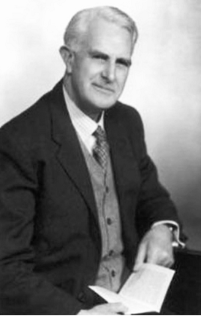
By T. Austin-Sparks
Look! I see the heavens opened and the Son of Man standing at the right hand of God! (Acts 7:56 ISV)
One, perhaps supreme, factor in the significance of Stephen was what he saw at the end and said with almost his last breath: "Behold, I see the heavens opened; and the Son of man standing on the right hand of God" (Acts 7:56). Here we have the central and basic reality of true New Testament Christianity, of the Church and the churches – Jesus on the right hand of God. The government, the authority, the headquarters, vested in the ascended Lord, and centered in heaven; not in Jerusalem, nor anywhere else on earth.... The Jewish rulers and Stephen's accusers were quick and shrewd enough to recognize the implications, for they had no less and no other import than that the "Temple made with hands" was finished; the dispensation of the Law was ended. There was an implicit call to the Church of Jesus to leave the Temple and all that went with it and to move into the greater, the fuller, and the abiding reality.
The tragedy is that, with [the book of] "Hebrews" in their hands, responsible leaders of the Church can still adhere to a system and form which is but the extension or carry-over of the Old Testament, with certain changes of phraseology. The immensity of the change and gap has certainly not been apprehended. Some of the most terrible things in the whole Bible are contained in that letter in relation to the crisis and the two ways and realms. The issue is no less than that of Life and death. All this has much to say regarding the true nature of the Church and the churches. He that hath eyes to see, let him see!
From: According to Christ - 4
Yesterday, September 21st a memorial was held for Charlie Kirk who was assassinated on eleven days before on September 10th. There were many who spoke during the memorial and lifted up the name of Jesus but none of what they said compared with Erika Kirk's testimony of God's love and forgiveness in when she "I forgive my husband's assassin."
The complete memorial is available to watch onTurning Point USA's YouTube channel and what Erika Kirk shared is available to watch in the video below..