

TapRootEdmonton

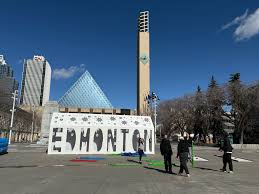
- The Audit Committee meets today at 9:30 am, and one of the items on the agenda is the City Auditor's review of how Edmonton runs its parking operations. The Parks and Roads Services Branch oversees about 6,000 parking spaces and collected roughly $13 million in parking revenue in 2025, at hourly rates running from $1.00 to $4.50. The auditor found the Branch has no Council-approved strategic vision and no performance management framework to guide its decisions, and no written guidance on how it sets rates, issues complimentary parking passes, discounts or waives fees during road closures, or restricts residential parking. In the absence of that guidance, the Branch has charged different rates in zones with comparable demand without documenting why, and does not have full oversight of the complimentary, discounted, and waived fees it grants. The auditor did conclude that the Branch is managing its parking payment app contract effectively, and made three recommendations in total.
- City Council holds a public hearing tomorrow at 9:30 am, and one of the 13 bylaws on the agenda would tighten Edmonton's rules for lodging houses, the dwellings where bedrooms are rented out one at a time. Administration wants the threshold lowered so that a dwelling with three or more individually rented bedrooms counts as a lodging house, down from four, and wants features such as individually numbered rooms, locks on bedroom doors, and locked storage in shared areas written into the definition to make enforcement easier. Lodging houses would be barred from row housing and multi-unit housing in the small scale residential zones and from row housing in the small-medium scale transition zone, with bedroom limits applied per lot rather than per site. The City logged 354 lodging house complaints between 2020 and 2025, 74 of them in 2025, and another 50 in the first seven months of this year. Council directed Administration to prepare the amendments on July 7th, and the bylaw can receive all three readings once the hearing closes, though passing it in a single meeting requires unanimous agreement. Community groups and housing non-profits consulted by the City described lodging houses as a vital source of low-cost and transitional housing for students, seniors, people with disabilities, and people moving in and out of supportive housing, while agreeing that enforcement of building codes and community standards is necessary. Renting a whole home to several tenants under one shared tenancy would not be affected.
- The Edmonton Police Commission has barred members of the public from speaking at its meetings for the rest of the year, and the remaining sessions will be held online. Commission Chair Ben Henderson says the decision followed three meetings in which public comment moved beyond criticism of the board and of police oversight into personal attacks, defamation, threats, and intimidation aimed at commissioners, police staff, and other members of the public. Residents can still watch the remaining meetings, set for September 17th, October 22nd, and November 19th, and the Commission will continue to accept written submissions related to its mandate. The Commission calls the suspension temporary and says it will review the decision before next year.
- Council will consider another $114.58 million worth of climate measures in Edmonton's next four-year budget deliberations, as Administration has put forward 27 actions costing $257 million in total. Councillors have also asked Administration to examine a revolving climate fund that would redirect a growing pot of $500,000 in annual energy savings into further projects, and added proposals to spend $5 million on community climate initiatives and $5 million on an Alberta Ecotrust Foundation endowment. Mayor Andrew Knack said it is far more costly to do nothing than to pay for preventative measures.
- Ward 8 (papastew) Councillor Michael Janz plans to bring a motion to Council that would charge developers a fee for every tree cut down while building new neighbourhoods on Edmonton's outskirts. Janz argues that the City currently pays to plant replacement trees elsewhere while developers keep the profit, and that applying the City's existing dollar assessments for removed trees to new development areas would produce millions of dollars worth of habitat value. He says the gap effectively subsidizes sprawl, and that it remains cheaper to build a cul-de-sac on the city's edge than to redevelop vacant downtown parking lots. The motion would not cover trees lost to infill, which a separate proposed bylaw may address. Mayor Andrew Knack has separately put forward a motion to require permits to remove trees from established lots inside the city, in response to concerns raised about infill developments.
YEGYEGYEGYEGYEGYEGYEGYEGYEGYEGYEGYEGYEGYEGYEGYEGYEGYEGYEGYEG
ON THE AGENDA
Mack Male
- An audit of parking operations found the city lacks a clear council-approved vision and formal guidance for rates, discounts, and residential restrictions. Auditors also found unexplained rate differences between areas with similar demand and inconsistent guest-permit rules. The city manages about 6,000 parking spaces and collected about $13 million in parking revenue in 2025. Administration accepts all three recommendations and plans to address them through its parking program modernization. The parking app contract was generally well managed, but auditors identified gaps in cybersecurity communication, occupancy data, and access to vendor performance data. Enforcement and fines were outside the audit’s scope.
- Council will consider zoning bylaw amendments that would lower the threshold for a lodging house from four individually rented bedrooms to three. Lodging houses would be prohibited in row and multi-unit housing in the small-scale residential and small-scale flex residential zones, as well as in secondary suites. In the small-medium scale transition residential zone, they would remain allowed in multi-unit housing, with a cap of 12 bedrooms per lot, but not in row housing. Administration says the changes would improve enforcement, though lodging houses can be difficult to identify before occupancy. Since the beginning of 2024, the city has approved 12 permits for new lodging houses with four to eight individually rented bedrooms. Consulted groups said lodging houses can provide affordable, flexible, and culturally relevant housing, while stressing tenant protections and property maintenance. Whole homes rented to multiple tenants under one shared tenancy would remain allowed.
- Council will consider a rezoning at 11537 University Avenue NW in McKernan, across from the Cross Cancer Institute, to allow a building up to 16 metres tall, or about four storeys. The site is within 400 metres of the Health Sciences/Jubilee LRT station. Administration supports the application because it would allow more housing near transit, employment, and services. All 10 responses to the mailed notice opposed the application, raising concerns that included building scale, loss of sunlight and privacy, traffic, and parking.
Here are some more key items:
- Council will resume its discussion of public engagement on the 2027-2030 budget and the city services and quality of life survey, after postponing both reports to Sept. 16. The budget engagement report found participants wanted a focus on core services but disagreed on what counts as core.
- Council services committee will consider three options for the 2027 meeting calendar. One would retain the current structure; another would move executive committee to Mondays and public hearings to mid-week where possible; a third would replace 19 one-day public hearings with 11 two-day hearings. That model would require more Thursday and Friday meetings but create three additional recess days. The final calendar report will go to council’s Oct. 27 organizational meeting.
- A city audit found that the municipal fleet maintenance program effectively manages maintenance to meet the needs of departments using more than 5,000 vehicles and pieces of equipment. Auditors found one area for improvement: There is no formal process to track feedback on parts suppliers, making recurring problems harder to identify across garages. Administration accepts the recommendation. The program supports vehicles such as snowplows, fire trucks, waste trucks, and DATS buses, but excludes conventional transit buses and LRT vehicles.
- Audit committee will consider the Office of the City Auditor’s 2027-2030 operating budget, starting at about $3.14 million in 2027, down $111,000 from the adjusted 2026 budget. It would retain 17 full-time-equivalent positions throughout the four years. A separate follow-up report says administration has closed 10 audit recommendations since the last update, leaving 27 outstanding as of Aug. 27, including four that are overdue.
- Administration will ask council to postpone the report on proposed active transportation network amendments to Dec. 8 to minimize service impacts for applicants at subsequent public hearings. Coun. Ashley Salvador’s motion seeking active transportation funding options and Coun. Thu Parmar’s proposal to examine shifting up to $220 million from neighbourhood renewal to arterial-road renewal remain listed as motions pending on the Sept. 8 selection sheet.
- Council’s continuation also includes two postponed private discussions: one on public safety involving the Edmonton Police Service and peace officers, and another on an intergovernmental update concerning a provincial pre-budget submission and partnership opportunity.
And here are updates on some of the items we told you about last week:
- Council gave first reading to the bylaw establishing a tax subclass for derelict non-residential properties. It still requires further readings. Council also passed all three readings of the bylaw expanding the derelict residential subclass citywide, with eligible properties to be included starting with January 2027 assessment notices.
- Council approved funding for the Valley Line transition management office, supporting the transfer of Valley Line Southeast operations and maintenance from TransEd to the Edmonton Transit Service in 2027. The approved request includes about $7.7 million for the temporary office and $20.5 million for vehicles, tools, equipment, and operating systems for the expanding LRT network, funded from the LRT reserve. It excludes the payment to terminate the TransEd contract.
- Council approved the updated climate resilience policy and committee recommendations on climate implementation priorities. The policy update adds adaptation targets and a sustainable return-on-investment threshold for new city buildings. New funding for climate actions will be considered through the 2027-2030 budget process.
- Council approved the updated public art policy and committee recommendations on the heritage places strategy. The art update clarifies the basis for funding, including the collection’s maintenance needs. The heritage update broadens the city’s approach beyond built heritage to include natural, Indigenous, community, and cultural heritage.
- Council approved committee recommendations on the snow and ice control policy, including requests for 2027-2030 budget options to improve school-zone clearing and continue assisted snow removal.
- Following its review of the operating and capital financial updates, council voted 12-1 to request options for drawing down the Planning and Development Business Model reserve, along with any recommended changes to the related fiscal policy. Coun. Jon Morgan opposed the motion.
- Council gave first reading to the municipal tax relief delegation amendment, which would let the city assessor delegate decisions to directors and managers. It also passed the bylaw repealing municipal historic designation for the Arlington Apartments, whose remaining walls were demolished in 2008 after a 2005 fire.
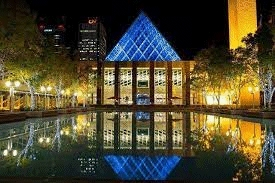
- City Council meets tomorrow at 9:30 am, with debate continuing Wednesday, and one of the first items is Administration's operating financial update for the first half of 2026. The report projects that tax-supported operations would finish the year $50.9 million over budget before the City draws on its Financial Strategies contingency funds, a gap Administration attributes to heavy early-year snow clearing, transit and fire overtime, and higher fuel costs. After pulling $51.4 million from those funds, the City instead projects a slim $0.5 million surplus. The Financial Stabilization Reserve is forecast to end 2026 at $135.0 million, about $15.4 million below its required minimum, and is not expected to recover until 2028. Administration also expects the City to finish the year with roughly $5 billion in outstanding debt. The projections do not yet include the costs of July's flooding or of US tariffs, which Administration says it is still assessing.
- Also on Tuesday's agenda, Council will vote on the money needed to bring the Valley Line Southeast LRT under public operation. In May, Council directed Administration to end the City's contract with private operator TransEd in 2027 and hand operations and maintenance to Edmonton Transit Service. Administration is now asking Council to approve just over $7.6 million in one-time operating costs for a temporary transition office covering staff, consultants, and asset inspections through 2027, plus a $20.5-million capital budget for fleet and equipment. All of it would be drawn from the City's LRT Reserve, which requires a one-time exemption to Council policy. The request does not include the payment owed to TransEd to end the contract, which Administration says will be financed through borrowing and brought back for approval later. Administration notes that moving an operating light rail line from a private to a public operator has few precedents in North America, and rates the workforce, technology, and asset-handover risks as high.
- Council will also give first reading to a bylaw creating a new property tax subclass for derelict commercial and industrial buildings. The measure would let the City assess non-residential properties that have sat unoccupied for at least a year at a higher tax rate, mirroring a derelict residential subclass Council created in 2023. Under Edmonton's City Charter, the higher rate could be set no greater than five times the lowest residential rate. Administration estimates that putting the subclass in place would cost up to $274,000 a year in ongoing funding, plus up to $1 million in one-time spending to reprogram the City's tax system. It projects the higher rate could raise about $400,000 a year from derelict properties if Council set it at the maximum. A funding request would come forward as part of the 2027-2030 budget.
- Two information reports before Council on Tuesday set the table for this fall's 2027-2030 budget debate. The first summarizes public engagement that drew 11,716 responses last spring, in which participants leaned toward finishing existing projects and maintaining current infrastructure rather than starting new ones, and ranked road and pathway maintenance as a top priority. When users of the City's online budget tool were asked to balance the books, 40% chose to raise property taxes, 42% kept them flat, and 18% cut them, for an average increase of about 1%. A companion satisfaction survey found that satisfaction with City services overall slipped to 62% this year from 68% in 2025. The same survey found that agreement Edmonton is an attractive place to expand a business or build a career fell to 53% from 61%. Council will weigh the findings as Administration prepares its proposed four-year budget.
- Ward 8 (papastew) Councillor Michael Janz has a motion pending that would change how the City talks about property taxes. It asks Administration to report tax increases and spending in dollars per $100,000 of assessed property value, rather than using a "typical home" example or percentages, which Janz argues are less transparent for residents. Janz also has motions pending to set a standard three-minute speaking limit for public speakers at committee and Council meetings, and to open each Council meeting with a moment of silence for people killed on Edmonton roads. The motions were introduced with notice at earlier meetings and are listed for debate at this week's Council session.
YEGYEGYEGYEGYEGYEGYEGYEGYEGYEGYEGYEGYEGYEGYEGYEGYEGYEGYEGYEG
ON THE AGENDA
Stephanie Swensrude
This week, council will consider tax subclasses for derelict properties, review public engagement on the 2027-2030 budget, and vote on funding for the Valley Line LRT transition and equipment for the expanding network.
There is a city council meeting on Sept. 8, with a continuation on Sept. 9 if required.
Here are some key items on the agenda this week:
- Council will vote on the first reading of a bylaw that would establish a citywide tax subclass for derelict non-residential properties that have been unoccupied for at least a year. Administration estimates implementation would require up to $274,000 in annual operating funding starting in 2027 and up to $1 million in capital funding, with those requests to be considered during the 2027-2030 budget deliberations. Council will also consider all three readings of a bylaw expanding the existing derelict residential subclass from mature neighbourhoods to the entire city. Funding for that expansion is already approved. If the bylaw passes, eligible properties across Edmonton will be included starting with the January 2027 assessment notices.
- Participants in public engagement on the 2027-2030 budget wanted a focus on core services but disagreed on what “core” means, says a report due at council. Of the 1,467 residents who used an online budget tool, 42% kept property tax revenue the same, 40% increased it, and 18% decreased it. More than half of budget-tool participants chose spending cuts for police, environment and climate, and a combined category covering arts, culture, tourism, inclusion, and economic development. Administration will use the feedback to help shape the proposed four-year operating and capital budgets.
- Council will be asked to approve funding for a transition management office to transfer the operations and maintenance of the Valley Line Southeast LRT from TransEd to the Edmonton Transit Service in 2027. Administration is seeking about $7.7 million for the temporary office and $20.5 million for vehicles, tools, equipment, and operating systems for Valley Line Southeast and other LRT expansions, all from the LRT reserve. The request excludes the payment to terminate the TransEd contract
.
Council will be asked to approve about $28.2 million from the LRT reserve for the Valley Line transition office and equipment for the expanding LRT network. (Jon Spencer/Flickr)
Here are some more key items:
- Council will vote on updates to the public art policy and the climate resilience policy, following infrastructure committee’s recommendations. The art update clarifies that funding is based on historical investments and collection maintenance needs. The climate update adds adaptation targets and a sustainable return on investment threshold to guide climate requirements for new city buildings.
- Coun. Ashley Salvador will introduce a motion requesting funding options for active transportation routes awaiting feasibility reviews and funding, plus an unfunded capital profile to continue implementing the Bike Plan, for the 2027-2030 budget deliberations.
- Coun. Thu Parmar will introduce a motion calling for a public hearing and an analysis of shifting up to $220 million from the Neighbourhood Renewal Program tax levy to arterial-road renewal for the 2027-2030 budget cycle.
- Council will consider first reading of a bylaw allowing the city assessor to delegate municipal tax relief decisions to directors and managers. The existing $500,000 annual limit on tax forgiveness by administration would remain unchanged.
- The city’s operating budget is projected to end 2026 with a $500,000 surplus after using $51.4 million that was set aside to manage budget pressures to offset a $50.9-million shortfall. Higher snow-clearing and overtime costs, as well as lower revenues from transit advertising and permits, are among the pressures. The forecast excludes the net effects of tariffs and heavy rainfall in June and July. The Financial Stabilization Reserve is still projected to end the year $15.4 million below its minimum balance of $150.4 million.
- Most significant capital projects are within acceptable tolerances for budget and schedule, administration says. Weighted by approved budgets, about 83% are within an acceptable range in terms of budget, and 94% are within an acceptable range in terms of schedule.
- Council will meet in private to discuss public safety, strategic planning, and intergovernmental matters, including a provincial pre-budget submission and partnership opportunity.
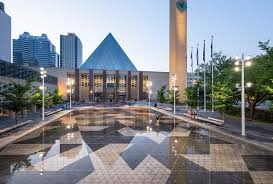
- The Community and Public Services Committee meets today at 9:30 am, and one of the items on the agenda is a review of the City's snow and ice control policy and program. Administration is asking the Committee to recommend that Council approve an updated policy that adds accessibility as a core outcome, but keeps service levels for the 2026-27 winter season largely unchanged. For the 2027-2030 budget deliberations, however, Administration is pitching a "Well Maintained City" service package of approximately $23.6 million in ongoing annual operating funding and $11.5 million in one-time capital funding, which would add more frequent residential blading, expanded parking ban enforcement and other measures. Optional add-ons, contingent on that package, include enhanced school zone clearing at $2.1 million per year and a calcium chloride system upgrade costing $2.5 million per year plus $4.4 million up front, which would return the controversial de-icer to major roadways. The report also recaps a volatile 2025-26 season, when December brought 59.9 centimeters of snow, nearly four times the monthly average, and enforcement officers issued 5,516 parking ban fines and 2,706 tickets for uncleared sidewalks.
- Also on the Committee's agenda today is a review of enforcement and penalties under the City's traffic bylaw, prepared in response to a Council motion from March. The report shows ticket volumes fell from 168,832 in 2015 to a low of 79,976 in 2020 before climbing back to 115,161 in 2025, with insufficient payment in EPark zones alone accounting for 35% of all tickets. Administration is proposing targeted fine increases for infractions it says threaten safety or block access, which it estimates would generate between $1.5 million and $1.7 million in additional revenue in 2027. Rather than automatic inflation indexing, fine amounts would be reviewed on a five-year cycle, with the next review in 2031. Administration has also temporarily added $1 million per year to the parking enforcement contract for 2026 and 2027, an increase it expects to be offset by roughly $2 million in fine revenue.
- Edmonton's bike lane expansion will continue as planned, after City Councillors on the Infrastructure Committee voted down Administration's recommendation to rework the remaining routes last Wednesday. The recommendation, made ahead of expected provincial legislation that could give the Province approval power over municipal bike lanes, would have seen more complex projects where construction has not yet started re-evaluated for alternative designs. Council approved $100 million in the 2023-2026 capital budget to rapidly expand the active transportation network, which has delivered about 35 kilometers of new routes in 2024 and 2025, with another 24 kilometers expected this year. The City has received more than 1,000 email and phone inquiries about the program since 2023, only about 2% of which were positive, with complaints focused on parking removal and changes to traffic patterns. More than 60 people registered to speak at the meeting, the majority in favour of continuing the expansion. Transportation Minister Devin Dreeshen says the Province's planned legislation could result in some existing bike lanes being removed.
- The City has laid out a detailed timeline for replacing the Low Level Bridge, with construction of a new span expected between 2029 and 2031. The plan would keep the bridge's northbound half, a protected historic structure built in 1900 as the community's first bridge across the North Saskatchewan River, for walking and cycling, while tearing down the southbound portion built in 1948. The replacement would be a four-lane crossing slightly west of the current bridge, with a pedestrian sidewalk on one side and an active pathway on the other. Ward 8 (papastew) Councillor Michael Janz is questioning whether the project needs to be funded in the 2027-2030 budget cycle, saying he wants more data on why the bridge needs replacing given the span is not at full capacity. Council is slated to include the replacement in the upcoming budget cycle, while the High Level Bridge replacement waits for the 2031-2039 cycle.
- City Council is taking another look at LRT fare gates, narrowly passing a motion from Ward 10 (Ipiihkoohkanipiaohtsi) Councillor Jon Morgan to develop a proposal for a pilot fare-gate program at a yet-to-be-determined station. The motion passed 7-6, though several supporters said they backed it only to get more information and would need convincing to fund the program in the upcoming four-year budget. Council examined fare gates in 2024 but decided against them, citing the cost and station designs that make barriers easy to get around. Morgan, a veteran of the Edmonton Transit Service, argues riders should pay their fair share for the taxpayer-funded system and suspects fare evasion is higher than the roughly 5% previously reported. Mayor Andrew Knack voted in favour but called it "extremely unlikely" he would support the program at budget time, saying the money would be better spent rebuilding LRT stations to improve safety.
YEGYEGYEGYEGYEGYEGYEGYEGYEGYEGYEGYEGYEGYEGYEGYEGYEGYEGYEGYEG
This week, councillors will review new climate action priorities, a proposed update to the snow-and-ice-control policy, and a new heritage places strategy.
There is a community and public services committee meeting on Aug. 31, an urban planning committee meeting on Sept. 1, and an executive committee meeting on Sept. 2.
Here are some key items on the agenda this week:
- Administration will present an updated policy and program for snow and ice control after a scheduled review. Resources and service levels this winter are expected to remain consistent with previous years; however, council can choose to fund an enhanced service level starting in winter 2027-2028. Administration said the “well maintained city” service package would stabilize operations and create year-round positions to provide festival and event support, “ensuring consistent, high-quality services that keep Edmonton’s economy moving throughout the year.” Council will vote on the policy at a future meeting. During record snowfall in the winter of 2025-2026, Mayor Andrew Knack said he wanted to significantly increase funding for snow clearing.
- A third-party review of the city’s climate strategies and action plans highlighted the need for more focused actions, closer alignment with the municipal budget cycle, and better monitoring and evaluation, says a report set to be presented to executive committee. Administration has identified 27 action items in its update to the climate implementation priorities. The report says the first priority is to establish an ongoing and accountable relationship with Indigenous peoples regarding climate. The remaining priorities are divided into the following categories: buildings and land use, transportation, infrastructure, nature and water, and low-carbon energy and waste. About $257 million would be required to meet all 27 priorities, about half of which is planned to be presented for consideration in the 2027-2030 budget process. About $5 million can be met with existing budget, and the remaining $129 million has no planned or existing funding source. Administration said it will also transition the carbon budget to a more comprehensive climate budget, which will use the priorities as its basis and also evaluate all other city projects in the 2027-2030 budget for their contribution to both climate risk and emissions.
- Urban planning committee will review the updated heritage places strategy following nearly two years of work. The proposed new heritage places strategy includes four pillars: natural heritage, Indigenous heritage, community and cultural heritage, and built heritage. Its guiding principles are to be inclusive, integrated, community-led, living and evolving, visible and accessible, and collaborative. The strategy is presented alongside a new council policy that outlines how the strategy will be implemented. A main goal of updating the strategy is to widen the definition of “heritage places” to include not just historic buildings, but also natural spaces, cultural landscapes, and community landmarks.
Snow covered the streets during record snowfall in January 2026. The proposed update to the snow-and-ice-control policy would keep service levels consistent with recent years. (Stephanie Swensrude)
Here are some more key items:
- Administration has prepared three options for enhancing cleanliness in Chinatown. The first option involves maintaining the cleanliness funding the neighbourhood receives, which is already more than other neighbourhoods. The second option is to increase funding of city-provided services, at a cost of $600,000 to $900,000. The third option would involve a city-funded and community-led cleaning service. The Chinatown Transformation Collaborative and YEG Chinatown Re:VITA have proposed separate community-led programs. CTC’s program focuses on professionally delivered operational cleaning services, while Re:VITA’s emphasizes community stewardship, neighbourhood activation, and placemaking. Administration didn’t include the cost of the third option as it may involve a request for proposals.
- Administration is increasing the fees that construction companies must pay when they obstruct road lanes. The daily on-street construction and maintenance (OSCAM) permit fee will rise to $32 from $25 in an effort to further incentivize faster completion of construction projects that necessitate road closures. Administration is also introducing a $10 daily fee for waste bins that are placed on public roadways. A report that will be presented to urban planning committee says that construction-related road closures were in place for an average of 43 days before a daily fee was introduced in 2019. That number fell to an average of 25 days in 2025.
- Administration plans to use more technology in parking enforcement, says a report that will be presented at a community and public services committee meeting. Parking complaints have increased by about 45% since 2023, creating a persistent backlog of unresolved complaints, the report said. The city plans to launch automated parking enforcement in 2028. Staff will also explore digital tickets, which the report said could save about 7,500 operational hours annually.
- A report says 81% of 311 complaints in 2025 were resolved within established timelines. The report, which is to be presented to executive committee, said administration has continued to improve the service experience of Edmontonians using 311.
- Executive committee will be asked to amend an agreement with Azolla Hydrogen to align with an extended timeline for the Alberta Zero-Emissions Fleet Fuelling project. Because it is a single-source contract, committee must approve changes; however, no additional funds are required because the extension will be covered by the already-approved city budget and grant funding from Emissions Reduction Alberta.
- Executive committee will be asked to recommend that the historic designation of the Arlington Apartments be rescinded. The building, formerly located at 10524 100 Avenue NW, was Edmonton’s first apartment building, and was designated a municipal historic resource in 1998. A fire damaged the building in 2005, but three facades were saved, and the lot was rezoned to allow for development that retained the historic elements of the remaining structure. The owner did not develop such a building and instead demolished the remaining walls in 2008. Administration now requires council approval to rescind the historic designation.
And here are updates on some of the items we told you about last week:
- Infrastructure committee rejected administration’s proposal to drop 14 planned routes from the city’s $100-million active transportation network expansion, leaving the existing plan in place. More than 60 people registered to speak, and most supported continuing the expansion, as the province prepares legislation that could affect municipal authority over bike lanes. Coun. Ashley Salvador said she intends to introduce a motion to direct administration to provide options for increasing funding for the active transportation infrastructure capital profile to complete all routes that were planned for the 2023-2026 budget cycle. The motion will also call for administration to include an unfunded capital profile to build active transportation infrastructure as informed by the forthcoming updated active transportation implementation guide.
- Infrastructure committee recommended that council approve proposed changes to the public art policy. The program was previously called Percent for Art, and provided about 1% of eligible costs from capital projects to cover the cost of the artwork’s creation and installation, as well as the Edmonton Arts Council’s costs to oversee the project, plus lifecycle management costs, care, conservation, and restoration. Since 2021, the definition of “1% of eligible capital projects” has been based on historic spending patterns dating back several years. Now, administration has proposed amending the policy to say that the city will allocate funding for a public art reserve through the operating budget approved by council, with reserve funding levels based on historical public art investments and collection maintenance requirements. Council is set to vote on the change at a future meeting.
- Councillors recommended that council approve the revised climate resilience policy that introduces a sustainable return on investment (S-ROI) metric. This means projects would incorporate climate-resilient requirements to a point where a positive S-ROI is demonstrated, and while this responds to financial constraints, it could also result in reduced environmental outcomes, administration said. Ward Nakota Isga Coun. Reed Clarke said that even though the policy is not perfect, he supports it, especially the S-ROI.“I think it’s a good, practical, systematic way to move forward,” he said.
- After a public hearing on Aug. 25, council approved a rezoning application to allow the Hope Mission to turn its support facility in the Girard industrial area into a year-round emergency shelter. During the discussion, Coun. Michael Janz wondered aloud whether Edmonton should cease approving new social services until other municipalities in the region start “pulling their weight.” He cited a March 2026 memo that indicated there are no emergency shelter beds open permanently to the general public in the municipalities surrounding Edmonton. “It just feels like Edmonton is being used as the blood bag for the rest of our region and the rest of our province,” Janz said.
- Representatives of the construction sector say they need to be involved in how extreme weather risks are addressed in project planning, procurement, and contract delivery. Infrastructure committee heard from representatives from the Edmonton Construction Association, which represents the industrial, commercial, and institutional construction sectors, including contractors hired for public projects such as roads and neighbourhood renewal. The shortness of Edmonton’s construction season has been exacerbated by repeat storms, and it can be hard to make up for weather-related delays, said Ryan Christensen, chair of the ECA’s board. Record-breaking rain in Edmonton this summer caused $42 million in uninsurable damage to infrastructure and projects, City of Edmonton staff told city council’s infrastructure committee meeting on Aug. 26. The City plans to recover costs through the province’s Hazard Assistance and Resilience Program, which would cover 90% of losses, leaving the city responsible for the rest. Severe weather affected work on the Valley Line West and Capital Line South LRT projects, among other ongoing projects.
- Utility committee directed administration to accelerate parts of the 20-year storm management plan after the summer’s record rainfall. EPCOR told councillors that it doesn’t yet know the full financial impact of the summer’s repeated severe storms, but it estimates there will be minimal operational costs and some emergency repairs needed.
- Coun. Michael Janz questioned whether the Low Level Bridge replacement should be funded as part of the 2027-2030 budget, as administration has proposed in a report to infrastructure committee. The project will likely be classified as growth instead of renewal, and administration has said that dollars for growth will be constrained in the upcoming budget. “I want to see more data why it has to be done now. It’s not at full capacity. I understand that we want to build for the future, but right now it’s a tough budget, and I want to make sure we’re not building before we need to,” Janz told reporters.
- Council postponed a public hearing for a mixed-use building in Glenwood.
- Council voted to rezone a parking lot downtown to allow for a small park.
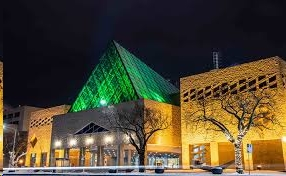
- The Community and Public Services Committee meets today at 9:30 am, where Ward 8 (papastew) Councillor Michael Janz has asked Administration to report on the long-delayed Rollie Miles Recreation Centre, proposed to replace the Scona Pool that closed in 2022. Design work is complete, but the project remains unfunded, and Administration says construction was estimated at $138 million back in 2023, plus another $13.5 million for related park work, with those figures needing to be revalidated. Finishing the detailed design alone would cost $8 million to $10 million, and the facility's net operating cost is projected at about $2.9 million a year, equal to a roughly 0.11% property tax increase. Even if Council funded the project in the 2027 to 2030 budget, the earliest it could open is 2031. Administration notes the surrounding area is already served by the Kinsmen Sports Centre and Confederation Leisure Centre, and says future decisions will be weighed against the City's broader infrastructure backlog. Community groups, including Friends of Scona Rec, have pressed Council to follow through since the pool's closure.
- The Urban Planning Committee meets tomorrow at 9:30 am, and one of the items on the agenda is a proposal to help pay for infrastructure tied to private development near transit and in the City's priority growth areas. Administration is recommending a new Infill Infrastructure Program that would have the City cover part of the cost of public infrastructure upgrades, such as sewer, stormwater and electrical work triggered by new housing and commercial projects, then recover money from later developers who benefit. The report pegs the average infrastructure cost at $3,200 per unit and suggests a $12-million budget could support up to 3,800 dwelling units over four years, noting that a predecessor fund spent $39 million to help build more than 4,600 units over three years. Administration says it is preparing an unfunded request for the 2027 to 2030 budget. It also acknowledges the program would redirect growth revenue away from general revenue and cannot guarantee that subsidized projects would not have gone ahead anyway. The item is for information only, with no vote scheduled tomorrow.
- Also on the Urban Planning Committee's agenda tomorrow is an update on Edmonton's shared e-scooter and e-bike program, prepared after Councillors asked in May for a move toward mandatory, geofenced parking. The program now handles more than 1.4 million trips a year across a 220-square-kilometer service area, a 190% jump in trips since 2022, with the City setting the rules while private vendors own and operate the fleets. Administration reports that complaints through 311 have stayed relatively flat even as ridership climbed, and that parking and rider behaviour remain the most common concerns. A pilot in the Mill Woods service expansion will test requiring devices to be left only in designated areas, add 21 parking corrals, and future vendor contracts could impose fines on riders who park improperly. E-scooters are capped at 20 kilometers per hour and e-bikes at 32, which the report says is at the lower end of comparable cities.
- Alberta Premier Danielle Smith is publicly criticizing the Edmonton Police Service over a video encouraging residents to report hate, saying police should focus on violent crime, theft, drugs, and vandalism rather than speech. In a post on X, Smith argued that free speech is a foundational Alberta value and that the province does not believe in policing unpopular or religious statements, even controversial ones, warning of a slippery slope she said other countries have gone down. Public Safety Minister Mike Ellis added that the province would contact police agencies to make sure their priorities are on violent crime, and said law enforcement should not be policing opinions or, in his words, "hurt feelings". Ellis said the government does not condone hate speech or violence but is committed to upholding free expression regardless of religious or political belief. The Edmonton Police Service refused to comment.
- Alberta recorded its highest-ever number of opioid-related emergency calls in 2025, and Edmonton accounted for nearly 70% of the province's 10,562 responses. However, overall opioid deaths in Alberta fell to 1,154 in 2025, the lowest since 2019. Addictions physician Dr. Monty Ghosh of the University of Alberta said Edmonton has become the country's worst spot for overdoses, driven by an increasingly toxic and unpredictable drug supply that now includes new opioids far more potent than fentanyl. Carfentanil, which is more than 100 times stronger than fentanyl, was detected in 89% of Edmonton's opioid deaths in 2025, up from 17% the year before. Ghosh warned that the province's closure of supervised consumption sites, including one at the Royal Alexandra Hospital, would push more people into emergency rooms. The province acknowledged that no community is being hit harder by addiction, but noted that it has invested more than $30 million in addiction and mental health supports in Edmonton, including more than 400 treatment and stabilization beds, and that the declining death statistics show it's plan is working.
YEGYEGYEGYEGYEGYEGYEGYEGYEGYEGYEGYEGYEGYEGYEGYEGYEGYEGYEGYEGYEGYEGYEGYEGYEGYEGYEGYEGYEGYEG
ON THE AGENDA
This week, Edmonton’s city council returns from its summer recess to discuss the financial statements from the associations that oversee business improvement areas, potential updates to the City Plan, and the implications of allowing city employees to administer naloxone while working.
There is a community and public services committee meeting on Aug. 10, an urban planning committee meeting on Aug. 11, and an executive committee meeting on Aug. 12.
Here are some key items on the agenda this week:
- An auditor has found that the Chinatown and Area Business Association’s 2025 financial statements did not include sufficient and appropriate audit evidence for the second year in a row, says a report to be presented to executive committee. The auditor also found issues including a lack of segregation of duties, poor organization of source documentation, limited review of financial statements, and no tracking or reconciliation of gift cards. Administration said it will bring forward options later this year that could result in the organization suspending or disestablishing. Administration said it will continue to work with the association to obtain financial updates.
- Administration will begin updating the City Plan, as Edmonton is expected to reach its first population threshold of 1.25 million in 2026. A report to be presented to urban planning committee said that city staff will analyze the progress of the plan’s targets and metrics and make minor administrative corrections. Next, staff will create a plan for the work to follow, which could range from targeted amendments and new implementation projects to a comprehensive renewal of the plan itself. Some metrics can be measured with available data, while others would use data from the 2026 federal census, which won’t be available at a neighbourhood level until 2028.
- Allowing city employees to administer naloxone on shift would require a dedicated program, says a report set to be presented to community and public services committee. Only trained city employees, such as peace officers and firefighters, are allowed to administer the opioid overdose reversal while on shift. Councillors inquired earlier this year about allowing other employees, including transit operators and library staff, to volunteer to use naloxone. The report said the city would be required to train those employees in administering first aid and naloxone, as well as in safety de-escalation and self-defence. The change would also come with legal implications and increased litigation risks and union implications, the report said. In 2025, 770 people died of overdoses in Edmonton, setting a new record and exceeding Calgary’s death rate from drug poisoning.
- Ward 1 (Nakota Isga) Councillor Reed Clarke is pushing a proposal to offer businesses a tax credit for expanding within Edmonton rather than relocating to neighbouring counties, an idea he has developed with Administration and hopes to bring forward as a motion. Clarke argues Edmonton is steadily losing industrial and commercial activity to places like Acheson in Parkland County and Nisku in Leduc County, where industrial tax rates can be as low as one-third of the City's. Edmonton's tax base sat at nearly an 80-20 split between residential and non-residential property in 2024, compared with roughly 60-40 in the surrounding counties, shifting more of the burden onto homeowners. The City issued 224 permits for industrial and commercial repair or construction in 2024, its lowest total in a decade and down from 389 in 2021. Mayor Andrew Knack has made keeping businesses in the city a priority. Some in the industry are skeptical, with commercial real-estate broker Bronwyn Scrivens calling the incentive a Band-Aid and arguing the City is trying to spend its way out of a problem caused by overspending, while York Realty president Matt Woolsey said Council needs to address its own spending before businesses will stay.
- The Government of Alberta has launched an online portal for residents to file complaints about bike lanes, part of a provincial push that Transportation Minister Devin Dreeshen says will inform legislation this fall giving the Province power to review or remove bike lanes in municipalities. The form asks residents to select concerns such as reduced parking, cost to taxpayers, low usage, or added congestion. The move escalates a dispute that began at City Council this month, when Edmonton redesigned a planned bike lane on 50th Street to preserve 30 street parking stalls at an added cost of $2.5 million. Dreeshen travelled to Edmonton's Capilano neighbourhood on Thursday to meet residents opposed to that project. Ward 10 (Ipiihkoohkanipiaohtsi) Councillor Jon Morgan, who opposed the redesign, said the concession will fall on taxpayers, noting the extra cost comes when many residents want the City to keep taxes low. Premier Danielle Smith defended the portal, saying some bike lanes are well used while others are barely used and create disruption, while supporters such as Bike Edmonton argue the Province is intervening in a local matter.
- Ward 8 (papastew) Councillor Michael Janz is at the centre of a controversy over social media posts about the war in Gaza, with the Jewish Federation of Edmonton calling on Mayor Andrew Knack to intervene. The Federation says posts Janz shared, including one claiming a newborn anywhere in the world is now more likely to be killed by Israel than to die any other way, demonize Israel and the local Jewish community and create a security risk. Federation CEO Stacey Leavitt-Wright said she wants Janz to stop, arguing the issue falls outside a City Councillor's role. Janz has doubled down, defending his posts as criticism of the Israeli government rather than antisemitism and suggesting the Israel pavilion be removed from the Heritage Festival in August. Mayor Knack said Councillors are free to speak on any issue but must share information that is accurate and factually verified, adding that elected officials should hold themselves to a high standard. Ward 9 (pihêsiwin) Councillor Michael Elliott and provincial Municipal Affairs Minister Dan Williams both criticized the posts, with Elliott arguing that international conflicts fall outside Council's jurisdiction and risk dividing the community.
- Emergency calls for overdoses at Edmonton transit locations more than doubled last year, according to Alberta Health Services data obtained through a freedom of information request. Edmonton recorded 368 such calls in 2025, up from 154 the year before and about 2.5 times the 146 calls logged in Calgary. Churchill station drew the most calls in the city, with 48 last year and 211 since 2018, while Central and Coliseum stations were the only others to top 100 over that period. The figures track only opioid-related calls. The press secretary for Mental Health and Addiction Minister Rick Wilson acknowledged Edmonton remains an outlier, citing high rates of opioid-related deaths involving carfentanil, even as provincial drug poisoning deaths fell to 1,423 in 2025 from a peak of 2,141 in 2023.
- After a weekend storm flooded Edmonton roads, sidewalks and recreation facilities, the City and utility provider EPCOR are pointing to a long-term plan they say will reduce the damage from future downpours. The two are in the sixth year of a $1.6-billion Stormwater Integrated Resource Plan, a 20-year strategy to slow and redirect storm water away from high-risk areas through measures such as dry ponds, upgraded sewers and water-absorbing features in older neighbourhoods. Ward 6 (Métis) Councillor Ashley Salvador said extreme weather events are becoming more common and that the City needs to be proactive with the infrastructure it builds. EPCOR also offers residents a stormwater rebate, free flood-prevention home inspections and a backwater valve subsidy to improve flood resilience. University of Alberta engineering professor Alireza Bayat said underground pipe and sewer systems across all jurisdictions need more frequent maintenance, but cautioned that replacing them takes time and that heavy rainfall can overwhelm even new infrastructure. The City said it responded to a record volume of fire and rescue calls during the storms and cannot yet estimate the cost of cleanup and repairs.
YEGYEGYEGYEGYEGYEGYEGYEGYEGYEGYEGYEGYEGYEGYEGYEGYEGYEGYEGYEGYEGYEGYEGYEGYEGYEGYEGYEGYEGYEGYEG
HEADLINES by Mariam Ibrahim
- The City of Edmonton said that westbound Yellowhead Trail between 97 Street and St. Albert Trail has reopened after crews completed emergency repairs for flood damage caused during recent heavy rains. The City thanked contractors, municipal crews and EPCOR for their help in completing the necessary work. The recent storms caused about $230 million in insured damage in May and June, according to the Insurance Bureau of Canada.
- The City of Edmonton was set to lift its extreme heat response at 9am on July 19 as conditions were expected to improve. Potable water stations will remain open through Sept. 30. Free bottled water and N95 masks are also available at city facilities.
- A meeting between Transportation Minister Devin Dreeshen and Capilano-area residents opposing a planned 50 Street bike lane was interrupted by a pro-bike-lane rally as the province gathered input for fall legislation. Meanwhile, the government launched a bike lane concerns portal, which received mixed reviews, CBC reported.
- Trisha Estabrooks said she will seek the Alberta NDP nomination in Edmonton-Strathcona after Naheed Nenshi announced he will run in Calgary in the next election.
- The City of Edmonton is investigating a Grovenor infill property that was being used as an Airbnb rental, Postmedia reported, despite receiving Canadian Mortgage and Housing Corporation financing for affordable rental housing. Mayor Andrew Knack said properties built under affordable housing agreements must comply with funding rules, while critics called for stronger oversight of short-term rentals.
- The former Italian Bakery site on 97 Street in Edmonton’s Chinatown has been put up for auction with a minimum opening bid of $990,000, less than half its previous $2.3-million listing price. The landmark property, which housed the bakery for more than 60 years before the downtown location closed in early 2025, includes retail, office and residential space. The Edmonton Chamber of Commerce hopes new ownership will help spur redevelopment and revitalize the surrounding area.
- Registered third-party advertisers supporting Alberta separation have raised more than $458,000 ahead of the Oct. 19 referendum, outpacing federalist groups by more than $365,000, according to the latest Elections Alberta figures. Separatist organization Let Alberta Decide is leading fundraising with about $257,000, while Alberta’s Voice is the top-raising federalist group at slightly more than $51,000. Under Alberta’s referendum rules, registered advertisers may spend up to $607,000 on advertising, while individual, corporate and union contributions are capped at a combined $5,000 annually.
- The Alberta government spent about $309,300 on an external agency to develop its official 2026 referendum website, according to documents obtained by Postmedia through an access to information request. The site, which launched in April and later added the question on Alberta separation from Canada, provides information, videos and FAQs on the province’s 10 referendum questions ahead of the Oct. 19 vote. The government said the contract was awarded through a competitive procurement process and that more than 40,000 people have visited the website.
- The Edmonton Elks drew 20,020 fans to Commonwealth Stadium on July 17 for a 19-17 win over the B.C. Lions, a turnout the team framed as a sign attendance is rebounding. “This was the best crowd we’ve seen outside of Labour Day. Full credit to the fans for showing up,” head coach Mark Kilam said.
- City Council has approved a new reserve fund to chip away at Edmonton's $10-billion infrastructure maintenance deficit, and Edmontonians will pay for it through property tax increases built into future budgets. Money in the fund can only be spent on maintaining existing City infrastructure. Residents will see a property tax increase of 0.5% for the first three years, rising to 0.75% for the following three years, and then 1% every year from 2033 onward, on top of regular budget increases. Ward 6 (Métis) Councillor Ashley Salvador, who championed the fund, said residents want assurance the City is taking care of what it already owns. Administration estimates the reserve will cover nearly $1 billion in maintenance costs per year by 2050, though that would still account for only about a third of Edmonton's total renewal needs.
- Council also voted on Tuesday to change the plan for new protected bike lanes on 50th Street between 102nd Avenue and 109A Avenue, choosing a more expensive design in order to keep street parking. Administration's original plan would have removed curbside parking to install the lanes at a cost of $2.4 million, but a motion from Ward 6 (Métis) Councillor Ashley Salvador directed the City toward a $4.9-million alternative that reallocates part of the 10-metre-wide centre median to retain about half the existing parking. A City memo noted that roughly 30 vehicles currently park along that stretch, most of them served by rear alleys and garages. Councillors Erin Rutherford, Jo-Anne Wright and Jon Morgan voted against the alternative on cost grounds, with Ward 10 (Ipiihkoohkanipiaohtsi) Councillor Jon Morgan questioning spending an extra $2.5 million for 30 stalls given the City's limited funds. Mayor Andrew Knack described the outcome as a "win-win" that avoids picking one mode of transportation over another. City Manager Eddie Robar said he is hearing growing concerns from councillors about bike lane plans across the city, and that adjustments come at a cost to designs already completed.
- Mayor Andrew Knack put forward a motion at City Council declaring the City's support for Alberta remaining in Canada, ahead of the October vote in which Albertans will decide whether the province should begin the legal process toward a separation referendum. Knack said he wished the motion did not have to happen and that it felt odd to be having the conversation, but argued Council should provide clear direction that national unity matters to the City. He told reporters that any conversation about Alberta separating from Canada is harmful and warned against complacency, saying the City needs to send a clear message to the business community and residents. The motion comes as Elections Alberta officials begin verifying signatures on a pro-independence petition.
- The City says its problem properties initiative has saved millions of dollars while cleaning up derelict sites across Edmonton, three-and-a-half years after the fire-department-led team began proactively targeting properties that pose a risk to their communities. Since 2023, the team has inspected more than 2,300 properties, issued 1,800 tickets, removed nearly 2.5 million pounds of debris and garbage, and secured more than 700 vacant properties considered a fire risk. Ward 6 (Métis) Councillor Ashley Salvador, who has driven the effort since she was first elected five years ago, said owners can be required to board up, fence off, and in some cases pay for 24/7 on-site security, with those costs charged back to the property owner. The City also claims to have influenced nearly 500 demolitions by owners, with many of those lots now redeveloped. Officials say the savings come from collected fines and from fewer calls to bylaw and emergency crews, and that problem properties can be reported through 311.
- Blake Desjarlais is leaving his role as Mayor Andrew Knack's chief of staff just three months after taking the position in April. In a statement shared by a City spokesperson, Desjarlais said the decision to step down followed careful reflection and discussion with the Mayor, calling the move mutual but not specifying a reason or his next steps. Desjarlais served as the Member of Parliament for Edmonton Griesbach between 2021 and 2025 before joining the Mayor's Office. Knack said he was proud of Desjarlais's service and had no doubt he would continue to serve Edmontonians. The City did not indicate who would take over the role.
YEGYEGYEGYEGYEGYEGYEGYEGYEGYEGYEGYEGYEGYEGYEGYEGYEGYEGYEGYEGYEGYEGYEGYEGYEGYEGYEGYEGYEGYEG
Edmonton is recovering after a severe thunderstorm caused power outages and flooding. More than 13,000 customers lost electricity, but power has since been restored to most. EPCOR crews continued clearing debris and repairing damage. Major roads including Yellowhead Trail and 97th Street were temporarily closed but have since mostly reopened. Several recreational facilities, including the TELUS World of Science - Edmonton and Peter Hemingway Aquatic Centre, remain closed due to flood damage. The sudden storm sent organizers of several summer festivals, including the Whyte Avenue Art Walk, scrambling.
The Edmonton Police Service sought an injunction to prevent the screening of a documentary about Mathios Arkangelo’s 2024 shooting, fearing it could identify officers under a publication ban, Postmedia reported. The John Humphrey Centre for Peace and Human Rights (JHC) premiered the film on June 28 but re-edited it to blur faces after police concerns. “While some in the community view this rapid legal maneuver as an attempt by police to suppress the film, JHC chose to approach this friction with direct dialogue and immediate accountability,” Renee Vaugeois, the centre’s executive director, told Postmedia. “Chief Driechel reached out to personally clarify that the action was intended to ensure officer safety amid active threats, rather than to censor the documentary.”
North-south vehicle access across 102 Avenue in downtown Edmonton will shift as part of Phase 2 of Valley Line West LRT construction. Starting about July 15, access on 105 Street will close, while 104 Street access will open. Access along 104 Street will be closed on Saturdays for the Downtown Farmers’ Market. The construction is expected to continue until the end of 2026, with north-south access remaining open on 109 Street and 101 Street.
Emergency calls regarding overdoses at Edmonton transit locations more than doubled in 2025 compared to the previous year, amounting to 368 calls, significantly surpassing Calgary’s 146 calls. Churchill LRT Station had the highest number of calls in Edmonton since 2018, with 211 incidents. Despite a dip in 2024, the increase reflects ongoing challenges in the city, especially with carfentanil-related deaths.
The City of Edmonton is inspecting residential waste carts to ensure proper sorting, focusing on compliance with its green bin program. City officials are doing daily checks and are leaving tags on bins to provide feedback on sorting practices. The effort is intended to improve waste management efficiency and educate residents about appropriate disposal methods.
The Edmonton International Street Performers Festival concluded with attendance reaching pre-COVID levels, organizers said, noting it has been “a slow build” to reach these numbers. The 10-day festival featured 38 performers from eight countries.
As concerns mount over Meta’s $13-billion data centre in Sturgeon County, Premier Danielle Smith defended the project and assured Albertans it will not hike utility bills or deplete water resources. She said the centre’s water use will match that of a typical golf course through a closed-loop system. The centre will draw energy from Alberta’s grid, with plans to later use power from the forthcoming Greenlight Electricity Centre.
Alberta has experienced a significant rise in tornado activity, with 23 tornadoes already recorded this year, compared to 15 in 2025. Environment Canada meteorologist Brian Proctor highlighted that the tornado season remains active, with six weeks left. The most recent struck Dillberry Lake Provincial Park, injuring three people. David Sills of the Northern Tornadoes Project said that this could be the most active tornado season on the Prairies since the 1980s. Researchers suggest that consistent atmospheric conditions and the interplay of heavy rainfall and fire weather patterns are contributing to the increase.
The Edmonton Oilers have signed St. Albert native Colton Dach to a two-year contract extension worth $1.2 million annually. Dach was acquired from the Chicago Blackhawks at the trade deadline last season. The 6-foot-4 forward appeared in eight games for Edmonton after his March debut and played in five playoff games.
ON THE AGENDA
Mariam Ibrahim
This week, council will debate rezoning applications and a design change for active transportation during its last week before going on summer recess.
There is a public hearing scheduled for July 6 and a council meeting scheduled for July 7 and 8.
Here are some key items on the agenda this week:
- Westrich Pacific has applied to rezone two properties in Wîhkwêntôwin. The developer has proposed rezoning a lot at 10004 112 Street from a direct control zone that allows for a 35-storey building to the mixed use zone, which allows for a 12-storey building. Westrich has also applied to rezone three lots at the corner of 100 Avenue and 111 Street from a direct control zone that allows for an 18-storey building to the medium-scale residential zone, which allows for an eight-storey building.
- Yorkton Equity Group has applied to rezone the Pacific Mall site and an adjacent parking lot in Chinatown to allow for an 18-storey building and a six-storey building, respectively. The current zoning allows for buildings up to 38 storeys high. Administration said it supports the application because the proposed buildings would align with Chinatown’s economic development plans.
- Coun. Ashley Salvador will move to direct administration to pause the current plans for active transportation infrastructure along 50 Street NW through Capilano, Gold Bar, and Fulton Place. The design would remove street parking to make way for a protected bike lane. Salvador said there is an alternative design that would maintain parking.
- Edmonton city council’s infrastructure committee has approved the creation of a Dedicated Renewal Fund to help ensure long-term infrastructure repair work can happen. Mayor Andrew Knack said the city needs to ensure consistent funding instead of relying on fluctuating external sources. The fund will be financed by raising the property tax levy from 0.5% to 1% by 2033. It is intended to address Edmonton’s $2.7 billion annual infrastructure renewal needs by 2046.
- The Edmonton Valley Zoo has reopened its Nocturnal Wing after extensive habitat enhancements for its Jamaican fruit bats. Director Gary Dewar highlighted new features such as a rock wall and specialized lighting that improve bat well-being and visitor experience. “We hope the experience encourages people to learn more about bats and the conservation challenges they face,” Dewar said.
- More than a year after the disappearance of 14-year-old Samuel Bird in west Edmonton, his mother, Alanna, is channeling her grief into a film project to honour his life and shed light on Indigenous youths’ experiences in Canada. Samuel’s mother has partnered with Indigenous filmmaker Corben Bowen on Every Day Gets Closer to Winter, which is still in development and seeking funding. Bryan Farrell is charged with second-degree murder in connection with Samuel’s death, with court proceedings adjourned to November.
- A $4.6-billion power station has received approval to supply energy to a planned data centre near Edmonton, potentially achieving Alberta’s data centre investment goal. The facility is slated for completion by mid-2030. The station will be built in an industrial area owned by Pembina, which is funding the project along with Morgan Stanley and Kineticor. Scott Burrows of Pembina said the project has received all necessary regulatory approvals and that construction will begin soon.
- St. Albert officials are urging residents to avoid the Sturgeon River after high water levels submerged sidewalks, signs, and park areas, after a record 255 millimetres of rain in June. St. Albert has closed several trails, including the Ray Gibbon Drive and Boudreau Road underpasses, and implemented flood mitigation measures.
- Elections Alberta rejected Corb Lund’s ‘Water Not Coal’ petition, which is aimed at banning new coal mining in the Eastern Slopes. Although the petition initially gathered more than 196,000 signatures, only 172,088 were verified, which is below the required 177,732.
- The Edmonton Oilers have extended contracts for defencemen Shakir Mukhamadullin and Spencer Stastney. Mukhamadullin, acquired from San Jose, signed a two-year extension with an average annual value of $1.75 million. Stastney secured a one-year deal with an average annual value of $1.525 million after joining from Nashville.
YEGYEGYEGYEGYEGYEGYEGYEGYEGYEGYEGYEGYEGYEGYEGYEGYEGYEGYEGYEGYEGYEGYEGYEGYEGYEGYEGYEG
- There will be a City Council Public Hearing today at 9:30 am, with eight planning and rezoning bylaws on the agenda. One proposal would rezone a vacant lot at 10004 - 112 Street in Wîhkwêntôwin for mixed use development up to 40 meters, or roughly 11 storeys, with the City hearing concerns during public notification that the proposed height is too tall for an area that already has enough high rises. Other items would allow medium scale housing on 111 Street in Wîhkwêntôwin and in the Prince Rupert neighbourhood, medium and large scale mixed use development in McCauley, and light industrial and small commercial businesses in Pembina. Council will also take up three related Rossdale items postponed from the June 23rd hearing, which would amend the Rossdale Area Redevelopment Plan, add a new River Crossing Special Area to the City's zoning rules, and rezone a set of riverside properties near 102 Street and 96 Avenue for medium and large scale development. Administration supports all eight bylaws, and each could receive final approval at the same meeting.
- City Council will meet tomorrow at 9:30 am, and two of the items on the agenda deal with how the City will pay to fix its aging infrastructure. Council will decide whether to formally create a Dedicated Renewal Fund Reserve, a step the Infrastructure Committee recommended at its June 24th meeting in response to a renewal funding shortfall projected at $2.8 billion over the 2027-2030 budget cycle and $10 billion over the next decade. Even if all available unconstrained funding went to renewal, Administration projects only 30% of the ideal investment in the City's $39.8-billion infrastructure portfolio would be funded over the next ten years. The report also details a proposed "enhancement" that would add a 0.5% tax increase every year from 2029 to 2036 dedicated to renewal - and even then, dedicated tax levies would cover only 60.7% of the projected renewal need in 2048. A companion report lays out Administration's draft priorities for renewing arterial roads, bridges, facilities, open spaces, and transit assets, with renewal of existing infrastructure prioritized over new growth projects in the next budget cycle. The 2027-2030 budget itself will be deliberated by Council in December.
- Ward 2 (Anirniq) Councillor Erin Rutherford is targeting amplified noise in Edmonton's public spaces, with the Community and Public Services Committee passing her motion on June 29th to draft amendments to the City's public spaces bylaw aimed at reducing unnecessary noise from amplification. Committee chair Ward 12 (Sspomitapi) Councillor Jo-Anne Wright said the push stems partly from concerns voiced by downtown businesses, including about an individual who regularly uses a megaphone and amplifier near Churchill Square at lunch time to spread his religious views. City solicitor Michael Gunther cautioned that any such bylaw must be carefully prepared to avoid violating the Charter of Rights and Freedoms' guarantee of free expression, though he noted municipalities may legally regulate amplification to prevent noise pollution. Administration had recommended tailoring noise limits to the distance from a doorway, but the Committee set that idea aside following a private session. Other options under consideration include requiring a permit to use amplification in public, designating specific "speakers corners", and defining disruptive noise in the bylaw itself. Calgary, Vancouver, and Toronto already have rules on where and when amplification is allowed, and the proposed changes will come back for review on September 25th before any public hearing.
- The same June 29th Committee meeting also took up fireworks, where John Adria, the owner of Uncle John's Fireworks, told City Council's Community and Public Services Committee that putting restrictions on fireworks has created far more problems than it has solved. Adria argued there were no issues before the regulations changed in 2019, and that permit conditions are now so tough that community groups have no legal path to holding the displays they safely ran for decades. He pointed to Saskatoon, which allows fireworks use by all adults without restrictions on several days each year, and suggested Edmonton's red tape is contributing to racism against southeast Asian communities, who he says get blamed whenever fireworks are used illegally. Chief bylaw enforcement officer David Jones told the Committee that fireworks complaints to 311 have increased 1,400% since 2020. After a home burned down during Diwali last year, the City is trying to chart a path that allows fireworks during the November holiday while ensuring fire safety, with Administration proposing to contribute $20,000 from the City's anti-racism fund toward one or more community-based celebrations. A representative of the Edmonton Diwali celebration steering committee urged members to proceed with a celebration at Mill Woods Park, which they declined to do, and Committee chair Ward 12 (Sspomitapi) Councillor Jo-Anne Wright said she was disappointed there was no bylaw review - though the Committee will review the City's fireworks rules in September.
- The City of Edmonton has opened a new impound lot near 122nd Street and 124th Avenue to help clear a backlog of hundreds of abandoned vehicles left on streets, alleys, and parking lots. The City and Edmonton police stopped towing cars earlier this year after the main impound lot filled up, and an overflow parcel is unavailable until December because construction crews are using it as a staging area for the Yellowhead Trail freeway conversion. The new lot can handle about 150 vehicles, but almost 400 are on the list to be towed. Ward 2 (Anirniq) Councillor Erin Rutherford says requests for parking enforcement have risen 45% in the last two years, and she doubts the new lot will solve the problem in the long term. As of June 26th, 362 abandoned vehicles were in the towing queue, down from 693 a month earlier, with crews moving 10 to 15 vehicles a day. Rutherford wrote to the Edmonton Police Commission in April urging it to relocate the tow lot to a larger site as a capital project in the next four-year budget, but the Commission says the current lot provides "suitable functionality" for the foreseeable future.

- The Community and Public Services Committee meets today at 9:30 am, and one of the items on the agenda is a review of how Edmonton regulates domesticated pigeons. Administration concluded that existing business and zoning rules are sufficient and that no bylaw amendments are needed, after finding that all 94 licensed pigeon owners inspected in 2025 were in compliance and that pigeon complaints made up just 0.15% of all animal-related complaints, 16 out of 11,031. A survey of adjacent property owners found that 91% had no concerns about licensed pigeons, with the small number of complaints citing droppings, cleanliness and pests. Current rules cap pigeons at 75 per residence and require birds to be kept in a loft or aviary acceptable to the City. Administration will add two new licence conditions effective January 2027, requiring owners to join a recognized pigeon association and to fit all birds with official identification leg bands. Association membership runs roughly $30 to $80 a year, which the report acknowledges could weigh on lower-income owners, though no change to the licence fee is recommended beyond a previously approved increase of one dollar per year for three years.
- Also before the Committee today is Administration's plan for fireworks communications and a 2026 Diwali celebration, the first of two reports responding to a Council motion. Administration will reallocate $25,000 a year from existing budgets for an enhanced, multilingual fireworks safety campaign, of which $17,000 would be an ongoing cost, stressing that setting off fireworks without a permit is illegal and unsafe. For 2026, the City will continue hosting its own celebratory Diwali event at City Hall, funded by $20,000 from the existing Anti-Racism budget, while adding a one-time $10,000 to help community groups build toward a larger event in 2027. The community's preferred option, a centralized fireworks show at Mill Woods Park, carries a $110,000 price tag under a cost-sharing model with $90,000 from community partners and $20,000 from the City, but the report notes most of that community funding has not yet been secured. Administration points to a permitted display on a Laurel-area school field that it says cut illegal street-level fireworks complaints by 70%. A separate report on regulatory options to address the unsafe purchase and discharge of fireworks is expected back at Committee in the fall.
- The Committee will also review a report on the legacy outcomes of major sport and cultural events the City helps attract, prepared at Council's request. Administration reports that Edmonton hosted 23 attracted events in 2024 and 2025, with a collective economic impact of $148.2 million in 2024 and $145 million in 2025, and that 12 events are scheduled for 2026 with an estimated combined impact of $222.4 million. Rather than apply Council's $3-million economic-impact threshold for requiring formal legacy plans in funding agreements, Administration recommends raising it to $6 million, arguing larger events are better placed to deliver lasting benefits. Examples of planned 2026 legacies include the CPKC Women's Open's goal of raising more than $3.9 million for the Stollery Children's Hospital and food-rescue efforts tied to the World Juniors. Administration says it will finalize a legacy measurement framework by the end of 2026 and begin implementing it in 2027, funded by reallocating money from an existing events budget rather than new spending. Oversight would be shared among the City, Explore Edmonton, Sport Edmonton and event rights holders.
- City Council voted at a public hearing on Tuesday to reduce the on-site parking required for new neighbourhood daycares, with the change taking effect immediately. Under the old rules, daycares needed two spaces for the first 10 children and one for each additional 10, but providers now need only one space for every 10 children, halved again in areas with unrestricted street parking. The City says that means a 40-child daycare that once needed five parking spaces could now need just two. Administration argued the change removes a regulatory barrier for small operators, pointing to a fall 2024 traffic study that found 17% of daycare trips are made on foot or by bike and that parking demand ran about 20% below the old requirements. Mayor Andrew Knack said the goal is to make daycare drop-offs less car-reliant by letting families walk or bike, while Ward 8 (papastew) Councillor Michael Janz, a longtime supporter, said he would like to go further and allow daycares on mid-block lots. Ward 7 (sipiwiyiniwak) Councillor Thu Parmar and Ward 3 (tastawiyiniwak) Councillor Karen Principe were the only members to vote against. One Cavanagh resident appealing a daycare permit next to her home warned the City must balance adding daycares in residential areas against protecting existing residents' quality of life.
- City Council is wrestling with how to keep up service levels as Edmonton's infrastructure repair backlog widens, with aging swimming pools used to illustrate the scale of the problem. The Infrastructure Committee released previously in-camera projections showing it would cost roughly $1 billion to maintain current aquatic service levels, with eight pools already more than 50 years old and four expected to be in poor condition by 2037. City officials told the Committee that 10.2% of Edmonton's total assets are in poor or very poor condition and that about 60% of city alleys need renewal. Overall, the City projects a $2.8-billion renewal gap between 2027 and 2030, ballooning to $10 billion by 2036, and says it can currently cover only 30.7% of its renewal needs, excluding bridges. Administration is weighing cost-saving measures such as repaving rather than reconstructing roads, deferring some downtown projects, and using boardwalks instead of new concrete sidewalks. Mayor Andrew Knack said the figures reinforce why a dedicated renewal fund is critical, while Deputy City Manager Stacey Padbury cautioned the problem cannot be solved in four years.
YEGYEGYEGYEGYEGYEGYEGYEGYEGYEGYEGYEGYEGYEGYEGYEGYEGYEGYEGYEGYEGYEGYEGYEGYEGYEGYEGYEGYEGYEGYEGYEG
ON THE AGENDA
Stephanie Swensrude
This week, council will discuss its policy for engaging Indigenous groups regarding river valley development, review regulations for megaphones in public spaces, and discuss Diwali celebrations and the use of fireworks.
There is a community and public services committee meeting on June 29, an audit selection committee meeting on June 29, an executive committee meeting on June 30, and an urban planning committee meeting on July 2.
Here are some key items on the agenda this week:
- Urban planning committee will discuss a report on Indigenous engagement regarding redevelopment on River Valley lands, on the heels of a contentious public hearing on June 23 regarding a zoning decision in Rossdale. Council postponed its decision about new zoning regulations for Rossdale in anticipation of future development, citing concerns that Indigenous groups had not been consulted adequately. Mayor Andrew Knack encouraged those concerned about the development to attend the July 2 committee meeting, as well as a July 9 public hearing. The report to committee says municipalities do not have a legal duty to consult Indigenous groups under section 35 of the Canadian Constitution, but Edmonton has established its own framework for Indigenous engagement, and administration said it is endeavouring to follow it, as well as the city’s memoranda of understanding with the Confederacy of Treaty Six First Nations, Otipemisiwak Métis Government, and Enoch Cree Nation.
- Administration has laid out ways that council can regulate amplification in public spaces. A report that will be presented to community and public services committee said that while noise pollution is a legitimate concern, regulating it is complicated because limiting the use of megaphones or speakers could potentially impact Charter rights. Some Edmontonians said they were against amplification in public spaces, while others said it can be important for freedom of expression and peaceful assembly. Administration said it could develop a time, duration, place, or volume (TDPV) regulation, which puts a restriction on when, how long, where, or how loud a disruptive sound may occur. It could also prohibit sound amplification unless someone has a permit.
- Administration plans to host an invite-only Diwali celebration at City Hall in 2026, with the possibility of a larger event in 2027, says a report that will be presented to community and public services committee. The report said community members would prefer a large event at Mill Woods Park in 2026, but the city has not confirmed about $90,000 of the event’s funding. The city will also improve communications about the use and sale of fireworks with signage as well as online and print communications in multiple languages. Diwali fireworks were blamed for property damage in 2025.
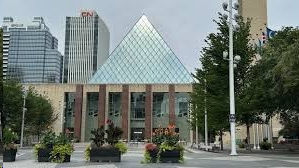
ON THE AGENDA
Stephanie Swensrude
This week, councillors will discuss priorities for infrastructure renewal as well as how capital projects impact future operating costs.
There is a utility committee meeting on June 22, a public hearing on June 23, and an infrastructure committee meeting on June 24.
Here are some key items on the agenda this week:
- Administration has listed sections of roads and bridges that it would like to prioritize for some level of renewal in the 2027-2030 budget cycle. Arterial roads can receive a paving treatment, a paving treatment with concrete or base repairs, or, for the roads in the worst condition, a full reconstruction. Administration said it recommends focusing on paving treatment for the upcoming cycle. This may seem counterintuitive, given the inclination to fix the worst roads first, a report to infrastructure committee acknowledges, but it says this is the best way to manage the network “within a fiscally constrained environment.” Council will debate funding for renewal projects during the 2027-2030 budget deliberations in the fall.
- Infrastructure committee will be asked to approve the creation of a dedicated renewal fund reserve, which aims to address a widening funding gap for the renewal of city-owned infrastructure. The reserve will be funded through a dedicated tax levy of up to 1% annually for the next 20 years, which would fund about 43% of the total ideal renewal needed in 2048. To narrow the gap further, council could choose to increase the renewal tax levy by 0.5%, which would fund about 60% of the total ideal renewal needed in 2048. If committee approves the fund, council will vote on it at a future meeting.
- Administration will include a capital project’s operating impacts — the day-to-day funds required to operate an asset once construction is finished — in the 2027-2030 budget deliberations, says a report that will be presented to infrastructure committee. Improving projections for the operating impacts of capital (OIC) is part of the total cost of ownership (TCO) project — in other words, the cost of building, operating, maintaining, and renewing an asset through the end of its service life, as opposed to just building it. “The enhanced integration of TCO, including OICs, into budgeting processes provides council with a more robust understanding in order to evaluate long-term operating costs before approving capital infrastructure investments,” the report said.
YEGYEGYEGYEGYEGYEGYEGYEGYEGYEGYEGYEGYEGYEGYEGYEGYEGYEGYEGYEGYEGYEGYEGYEG
- The Utility Committee will meet today at 9:30 am, and EPCOR Water Services will present a set of reports on how Edmonton's water and wastewater systems are performing financially and what the utility plans to measure next. EPCOR's progress report for the year ended December 31st, 2025 shows In-City Water earned a 10.96% return on equity, higher than the 10.54% it had forecast, driven largely by stronger than expected revenue and customer growth. Wastewater Treatment came in slightly under forecast at 10.85% and Wastewater Collection landed at 10.26%, roughly in line with its plan. The reports also reveal that projected water capital spending for 2022 to 2026 has reached $719.8 million, which is $209.4 million, or 42%, above the original forecast, with similar overruns in wastewater treatment. EPCOR is also seeking Committee feedback on the performance measures it intends to use in its next rate application covering 2028 to 2031, the framework that ultimately shapes what Edmontonians pay on their water bills. All three reports are listed for information only, meaning the Committee will receive them rather than vote.
- Also on the Utility Committee's agenda today is a report on how the City handles illegal dumping at apartment and condo buildings, prepared after Councillors asked Administration in March for options to address the problem. The report notes that between January 2021 and the end of March 2026, the City received over 600 complaints of illegal dumping on private property, which usually takes the form of abandoned furniture and garbage or waste dumped in another building's bins. Administration points to existing tools such as four Eco Stations, eight annual Big Bin events and free disposal weekends, and says it is studying further measures, including a new large item collection program and tougher fines. The Community Standards Bylaw currently sets a $250 fine for common dumping on private property and a $1,000 fine for large items or construction waste, figures property managers told the City are too low. Any new spending, including a possible large item pickup service to be piloted in 2027, would be brought forward through the 2027 Waste Services rate filing expected before Council in late 2026.
- The Infrastructure Committee will meet on Wednesday at 9:30 am, where one of the items is Administration's draft approach to renewing the City's existing infrastructure in the 2027 to 2030 budget cycle. The report values Edmonton's total infrastructure portfolio of roads, bridges, facilities and transit at $39.8 billion, and signals a deliberate shift toward maintaining and renewing those assets rather than building new ones. It cites an earlier forecast of a renewal investment gap of $2.8 billion over the four years from 2027 to 2030, climbing to $10 billion over the decade to 2036. Administration says renewal projects will be ranked not only on physical condition but also on strategic alignment with Council priorities and service needs, with growth projects funded only when required for safety, mandated by law or eligible for outside funding. The draft priority lists for bridges, roads, facilities, open space and transit are presented as unranked and subject to change once the capital budget is finalized in late 2026.
- In other Council business, members voted 7-6 to build a larger transit garage in southeast Edmonton, taking on an additional $66 million in borrowing to do so. The decision, made during a multiday budget adjustment, reversed an earlier recommendation from City Staff to scale the project down to keep it inside its $367-million budget. The original plan envisioned storage for 430 buses, Administration proposed a smaller facility for 250 to 290, and Council settled on a garage holding 330 to 380 buses, with a federal grant covering part of the cost. Ward 4 (Dene) Councillor Aaron Paquette argued the investment must be made now because construction costs and transit demand will only rise, while Ward 2 (Anirniq) Councillor Erin Rutherford warned the garage could sit half-full and leave less money for projects like the Metro Line extension, saying "we don't have an infinite pool of funding". More than half of Edmonton's bus fleet is rated in poor or very poor condition, and with a standard diesel bus costing roughly $1 million, the City is approaching its debt limit ahead of a four-year budget later this year. Mayor Andrew Knack took a more optimistic view, acknowledging a period of austerity in funding from other governments but saying transit has been chronically underfunded for decades. The garage is expected to be completed in 2032.
- Council also voted unanimously on Wednesday to proceed with a 2SLGBTQIA+ safe spaces action plan aimed at making City facilities and operations more responsive to the community's needs. Council had previously committed $750,000 to the effort last fall, distributed to support groups through grants, and a further $750,000 a year to continue the program will be weighed during the City's four-year budget deliberations. Mayor Andrew Knack tied the plan to provincial policy, noting the City is "being told what kind of flags we can hang in our buildings" and citing provincial legislation affecting transgender youth in sports, medical treatment, and school libraries. The City's report says there are hate crimes targeting sexual and gender expression trending upward, with 50 such incidents recorded in Edmonton in 2024, and to a local survey in which 81% of community members reported negative public interactions. It also says that a disproportionate share of Edmontonians experiencing homelessness identify on the 2SLGBTQIA+ spectrum, just under 12% of the roughly 800 unhoused people who disclosed their orientation. The report estimates more than 40,000 Edmontonians identify as 2SLGBTQIA+, including more than 2,000 who identify as "gender diverse."
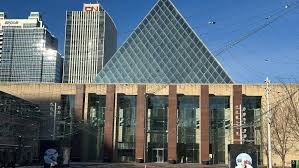
ON THE AGENDA
Stephanie Swensrude
This week, council is set to make some adjustments to the final year of the 2023-2026 capital budget, examine options for building the southeast transit garage to its original scope, and hear an update on the state of community league facilities.
There is a public hearing scheduled on June 15 and a council meeting scheduled on June 16 and 17.
Here are some key items on the agenda this week:
- Administration recommends several adjustments to the final year of the 2023-2026 capital budget, including new projects totalling $45 million, scope changes totalling $44 million, and recosting adjustments totalling $4.8 million. A report to be presented to council says most new projects are related to projects previously approved that are moving to a new stage and require funding. However, one new funding request is for $600,000 to demolish the Koermann Block, one of the few buildings along The Armature, which the city had listed for sale for affordable housing. The report said the building needs to be demolished immediately due to critical structural failures, safety hazards, and ongoing liability risks. The interior of the building is collapsed, there are large holes in the roof, and the basement is flooded, posing a risk to unauthorized occupants, the city said. The building is listed on the inventory of historic resources, meaning it is deemed to have historic value, but it doesn’t have full legal protection from alteration or demolition. The building is historically significant for its connection to the local German community prior to the First World War. Council will also discuss changes to the capital budgets for waste services and renewable energy systems.
- Administration has laid out four options for building the southeast transit garage to accommodate more buses. In April, councillors learned that plans for the garage had been scaled down from a capacity for 430 buses to between 255 and 290. Emily Stremel, chair of Edmonton Transit Riders, told Taproot that garage capacity is key to expanding transit service in future years. Councillors asked administration to return with options to build the facility out to its original capacity, which are laid out in a private attachment.
- A review found that community league facilities face significant challenges, including aging infrastructure, an unfunded capital liability, and inconsistent service levels across the city. Community leagues need $100 million in the next decade for infrastructure renewal, and about $19 million has been deemed critical for safety, said a report that will be presented to council. The city and the Edmonton Federation of Community Leagues are designing a new framework to establish a long-term roadmap to address infrastructure deficits as the city’s population grows.
YEGYEGYEGYEGYEGYEGYEGYEGYEGYEGYEGYEGYEGYEGYEGYEGYEGYEGYEGYEGYEGYEGYEGYEGYEGYEGYEGYEG
- City Council will meet on Tuesday at 9:30 am, and several items on the agenda propose adjustments to the City's capital budgets. The main package, the Spring 2026 Supplemental Capital Budget Adjustment, would increase the 2023-2026 capital budget for tax-supported operations by a net $75.6 million, including $45.1 million in new capital profiles, such as $22.2 million to rehabilitate the northbound Low Level Bridge and $15.9 million for the 178 Street bridge over Whitemud Drive. It also includes $44.2 million in scope changes, among them $15 million in new tax-supported debt for the Southeast Transit Garage. A separate Waste Services adjustment recommends $5.65 million in recosting, including raising the budget for the Coronation Eco Station expansion from $16.3 million to $17.9 million after a construction tender came in about 10% over budget, plus pre-approval of $7.84 million in 2027 utility funding so 17 waste collection vehicles can be ordered in 2026. A third report asks for a $7.6-million increase to the budget for the Blatchford Renewable Energy Utility's distribution piping system, raising it from $15.5 million to $23.1 million.
- Visitors to Fort Edmonton Park, the Valley Zoo and the Muttart Conservatory may have to pay for parking next year under a pilot project planned for 2027, part of a package of parking changes presented to City Council's Urban Planning Committee that could boost revenue by $5.4 million. Ward 8 (papastew) Councillor Michael Janz, who requested the report in December, said the choice is "either user fees or property taxes" as the City tries to mitigate property tax increases driven by rising costs. Janz is also asking the City to look into a Calgary-style system where parking fines increase the longer a ticket goes unpaid, with a report due back later in the year. Separately, the City is looking to expand automated parking enforcement, which Administration claims could bring in at least $14 million in revenue when fully implemented, and to sign a $1-million contract to put more enforcement officers on the ground after a 42% increase in calls requesting more parking enforcement. Administration says 30% of Edmonton's road users come from outside the city, with the City's safe mobility director arguing that Edmontonians are subsidizing parking for people who do not live in Edmonton. The Committee also voted 4-0 against a proposal to end the 15-minute free parking program, which had already been cut back from 30 minutes in the last budget.
- City Council's Community and Public Services Committee unanimously passed a motion from Mayor Andrew Knack last week to explore either a year-round day shelter program or a full community hub program for people experiencing homelessness. The $6.5-million plan will be discussed as part of the next four-year budget deliberations. Knack said the number of people dying on Edmonton's streets has risen from the 30s each year to over 300 and called for a "war-time effort" to make progress on the crisis. Support came from across the board, including the Edmonton Downtown Business Association, which says that with limited daytime options available, libraries, transit stations, parks, pedways and business storefronts become the default places where people spend their days. The Association funds its own core patrol, which conducted more than 1,900 wellness checks between January and May, and argued that more day shelters would take pressure off Downtown businesses currently spending heavily on security and support services. Council also received a letter from the Edmonton Chamber of Commerce pushing for community service hubs, while Ward 10 (Ipiihkoohkanipiaohtsi) Councillor Jon Morgan argued the City and ratepayers are already paying for the crisis through first responders, maintenance costs in public spaces, and encampment clean-ups.
- The Community and Public Services Committee also voted 3-1 last week to send a stormwater billing report back to Administration and return to the decades-old centralized payment system, sparing Edmonton's more than 160 community leagues from directly processing monthly EPCOR stormwater charges, despite both EPCOR and Administration calling for the leagues to be billed directly. Ward 10 (Ipiihkoohkanipiaohtsi) Councillor Jon Morgan made the motion after hearing from community league volunteers. An updated report is expected back on September 25th. Before April 1st, 2025, EPCOR billed the City directly, and the City paid the utility fees on behalf of the leagues, recovering part of the cost through an annual $116,798 tax levy charged to the Edmonton Federation of Community Leagues, even though Administration says the actual cost runs between $152,000 and $284,000. EPCOR flagged the discrepancy in an audit, which also found that other properties were likely receiving stormwater services without being charged, and work to identify those properties is expected to be complete by 2027. Council allocated $995,648 through the community league operating grant to help pay the new bills from April 1st to December 31st, 2025, but the funding did not line up with expenses and many leagues found themselves in a cash crunch. The Federation urged the Committee to maintain a centralized model, arguing that volunteer-run leagues are not equipped to handle tracking and budgeting for monthly stormwater bills.
- City Manager Eddie Robar announced last Tuesday that the Edmonton Transit Service (ETS) will take over operation of the Valley Line LRT over the next two years, ending the City's 30-year public-private partnership with TransEd Partners, the consortium that built the line, 25 years ahead of schedule. The decision was made during an in-camera session on May 19th, and officials will not say how much the City is paying TransEd as a termination payment, though the original contract was worth $1.8 billion. Because a different contractor is building the Valley Line West extension, TransEd was never contracted to operate it, and officials claim that moving everything to ETS was the cheapest of three options, the others being expanding TransEd's contract or finding a new operator. The City predicts the change will mean better coordination between buses and the LRT when a train has to be taken out of service, reducing wait times for replacement buses. Ward 8 (papastew) Councillor Michael Janz called the move a "great opportunity", saying ETS is motivated by quality service rather than profit. Construction of the Valley Line West is on schedule to be finished by 2028, after which the system will be extensively tested before regular passengers are allowed on board.
- The Community and Public Services Committee meets today at 9:30 am. One of the items on its agenda asks the Committee to recommend that Council rescind a motion that Council itself passed at its December 2025 budget meeting. That motion directed Administration to amend the agreements governing community leagues so the City would directly pay all stormwater charges that EPCOR levies against the leagues, ensuring the leagues are never billed for those fees. After reviewing the billing process, Administration now recommends that community leagues keep being billed directly by EPCOR, arguing the agreements already make leagues responsible for their own utility costs and that Council has already approved $995,648 in annual funding that fully offsets the charges. Reverting to City-paid billing would mean removing that roughly $1 million from the community league budget, shifting it to the City's utility budget, and amending every individual league agreement.
- Also on today's agenda, the Committee will receive a report evaluating future spending on day spaces, which are daytime facilities offering respite and basic services for people experiencing homelessness. Council put $1 million into extending hours at four existing sites between December 2025 and March 2026, during which 6,634 unique individuals visited 37,663 times, a 51% increase in clients and a 169% increase in visits over the previous winter. Administration says there is currently no sustainable ongoing funding for day spaces and lays out four options, ranging from no new investment, to a seasonal winter respite model, to a year-round model, to a comprehensive community service hub, which is the costliest and the one sector partners preferred. Should Council direct an investment, Administration would bring an unfunded service package through the 2027-2030 budget.
- The Executive Committee meets on Wednesday at 9:30 am. On the agenda is a discussion about whether to approve a below-market-value sale of a City-owned property on 118 Avenue in Alberta Avenue for a community arts development. The City reacquired the former arts site for a nominal value in May 2025, then listed it for six months with requirements that any buyer deliver an arts project including a black box theatre, gallery, studio and maker spaces, and housing. Despite emailing more than 8,300 subscribers on its property sales list, the City received only two proposals. Council has set aside $3,304,823 from a reserve to fund the arts components of the site, and both bidders are seeking to draw on that money. Because the sale is below fair market value, Committee approval is required before Administration can begin negotiating with its preferred proponent.
- Also before Executive Committee on Wednesday are two linked information reports on the City's economic development work. The first is a refreshed ten-year strategy, called Edmonton Advantage, which aims to reverse what Administration describes as a "business-unfriendly perception" and a tax base in which residential growth outpaces business and industrial growth, and which Administration says will need roughly $70 million over 2027-2030. The second is a review of the four City-funded agencies that receive taxpayer funding: Explore Edmonton at $22.7 million annually, Edmonton Unlimited at $5.3 million, Edmonton Global at $3.3 million, and Edmonton Screen at $1.2 million. An independent consultant found the agencies' mandates clear and recommended adding mid-stage business support, but Administration does not recommend mandate changes or a new agency. The review also notes Edmonton Global's membership has fallen from 14 municipalities to 9, with 3 more giving notice they will leave.
- Mayor Andrew Knack joined the Big Cities Mayors' Caucus of the Federation of Canadian Municipalities on Thursday in asking the federal government to commit billions of dollars to downtown revitalization ahead of Ottawa's fall budget. The caucus wants the federal government to follow its Parliamentary Budget Officer's recommendation to invest $3.5 billion annually to cut chronic homelessness by at least 50% by 2030, to raise the Canada Public Transit Fund from $25 billion to $30 billion over ten years, and to at least double the Build Communities Strong Fund. Knack argued the homelessness and safety crisis cannot be solved by any one order of government acting alone and called for a coordinated federal-provincial-municipal response. The push follows an April report from the Downtown Revitalization Coalition flagging visible drug use and disorder, and a CBC investigation that found transit-related crime in Edmonton more than doubled over nine years.
YEGYEGYEGYEGYEGYEGYEGYEGYEGYEGYEGYEGYEGYEGYEGYEGYEGYEGYEGYEGYEGYEGYEGYEG
This week, Edmonton city councillors will discuss day spaces for vulnerable Edmontonians, a review of economic development agencies, and potential changes to city-owned parking.
There is a community and public services committee meeting on June 8, an urban planning committee meeting on June 9, and an executive committee meeting on June 10.
Here are some key items on the agenda this week:
- There are no sustainable municipal funding options for day shelter spaces, says a report set to be presented to community and public services committee. Mayor Andrew Knack’s first motion of this term directed administration to allocate $1 million to expand access to day shelter spaces, and for administration to report back with an evaluation of the options to build out the service. The report said the funding allowed hours at four sites to increase from 99 per week to 252; the sites were visited nearly 38,000 times by more than 6,600 people. Administration laid out investment options for winter respite day spaces, year-round day spaces, and a community service hub with clinical healthcare and holistic supports. More options for supporting vulnerable people will be included in a report coming later this month that is meant to outline a way to transition the city out of providing services to people experiencing homelessness, which administration called a provincial responsibility.
- Administration has refreshed its economic development strategy, titled Edmonton Advantage, to adapt to current and anticipated market realities. The strategy outlines three primary issues: Edmonton is perceived as unfriendly to business, there is a lack of awareness around the city’s business proposition, and residential growth is outpacing business and industry growth, resulting in a tax imbalance. The strategy’s pillars aim to enable a strong business environment, market the Edmonton advantage, and drive investment. A cross-referenced report about four of the city’s economic development agencies — Explore Edmonton, Edmonton Global, Edmonton Screen, and Edmonton Unlimited — said a review found that the organizations have clear and complementary mandates with no significant duplication, and that the agencies are delivering measurable economic outcomes. While the ecosystem supports growth, there is a gap in mid-stage business retention and expansion support, which could limit firms transitioning from startup to growth and expansion, the report said. The consultant who examined the agencies recommended setting up a new economic agency to add scale-up supports for local businesses, but administration did not endorse that idea.
- Administration is considering changes to city-owned parking, including increased rates, the elimination of the free 15-minute period, and a pilot project for paid parking at facilities such as the Muttart Conservatory, the Edmonton Valley Zoo, and Fort Edmonton Park. A report to be presented to urban planning committee says demand for parking has increased as Edmonton grows, and curbside space is supporting a broader range of uses than parking, including deliveries, transit access, festivals, patios, activations, and micromobility devices such as e-scooters. The proposed changes are expected to manage demand and improve turnover while increasing revenue. A cross-referenced report outlines options for parking benefit districts, a system where parking revenue would be invested into the area it is collected from. While administration doesn’t recommend implementing parking benefit districts at this time, it said it will bring forward options in 2027 once the overall parking system is more financially stable and effective.
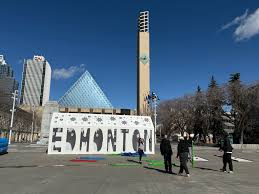
- The Infrastructure Committee will meet on Monday, with one of the most significant items on its agenda being a major reassessment of what to do with the High Level Bridge. Administration is recommending Council scrap the previously approved $200 million rehabilitation plan and instead plan for full replacement - a strategic pivot triggered by updated cost estimates that came in at $380 million at the 30% design stage, nearly double the original figure. The bridge, built between 1910 and 1913, carries 24,000-27,000 vehicles per day and has an estimated remaining service life of only 10-15 years. The total cost of the broader central area bridge renewal program - encompassing the High Level Bridge, the Low Level Bridges, and Dawson Bridge - is estimated at approximately $1.3 billion. Because the High Level Bridge holds a Municipal Historic Resource designation, Council must formally repeal that designation before demolition can proceed. The construction and decommissioning timeline runs from 2031 to 2039, with debt servicing costs beginning at $6.6 million in 2033 and rising to $28 million annually by 2036.
- Also this week, the Council Services Committee will consider a request from Ward 10 (Ipiihkoohkanipiaohtsi) Councillor Jon Morgan for $3,000 from the Common Travel Budget to attend the Calgary Stampede from July 3rd to July 12th, 2026. The request reveals that Ward 9 (pihêsiwin) Councillor Michael Elliott and Ward 11 (Karhiio) Councillor Keren Tang had already received Stampede travel approvals of $3,000 and $2,000, respectively, earlier in the year. The total Common Travel Budget for 2026 is $73,002, and with $58,500 already approved or estimated for other travel this year, only $14,502 remains. The committee must decide whether to approve Morgan's additional request from that remaining balance.
- The Audit Committee meets on Wednesday, and among the items on its agenda is the City Auditor's follow-up dashboard on outstanding audit recommendations. Across all City departments, 35 audit recommendations remain unresolved and five are now overdue. The most delayed item is the Historic Resource Management Program recommendation, originally due December 31st, 2024, and now revised to June 30th, 2026, making it 16 months past its original deadline. A Fraud Risk Management recommendation is four months overdue and has been extended to June 30th, 2027, with Administration citing staffing challenges as the reason for the delay. A Cybersecurity recommendation is also four months past due, and two items in the Taxation, Assessment and Collection System category are one month overdue. Financial Services has the highest number of outstanding recommendations, at 9. The Audit Committee received administrative explanations for the delays, but those explanations rely on revised timelines rather than completed action.
- The Council Services Committee's agenda this week includes Administration's 2026 financial update for Councillors' offices. Each Councillor receives an individual ward office budget of $214,304, and the report provides a line-by-line breakdown of spending by councillor, allowing direct comparison of how individual ward budgets are being managed through the first four months of the year. The total approved budget for all Councillors' offices combined is $6.088 million for the year. As of April 30th, the combined offices carry a "net favourable variance" of $74,000, meaning they are running 3.1% under budget overall. Ward office budgets collectively are 9.3% under-spent, while the common budget is in a slight deficit of $6,000.
- Edmonton Police Service and Recovery Alberta are opening an Integrated Stabilization Centre designed to detain people causing public disorder who have not been charged with a criminal offence. The centre uses authority under the Gaming, Liquor and Cannabis Act to hold intoxicated individuals for up to 24 hours without a criminal charge being laid. The facility is staffed by Recovery Alberta clinical workers rather than police officers, and is intended to divert individuals away from emergency departments and jail cells. The arrangement raises civil liberties questions, as individuals can be held for nearly a full day based on an administrative determination rather than a criminal process. However, supporters of the model argue that it connects people in crisis to addiction and mental health services more effectively than either an arrest or a hospital visit would.
ONTHEAGENDAONTHE AGENDAONTHEAGENDAYEGYEGYEGYEGYEGYEGYEGYEG
Stephanie Swensrude
Here are some key items on the agenda this week:
- The High Level Bridge and Low Level Bridges will be decommissioned and replaced over the next 10 to 15 years, says a report to be presented to infrastructure committee. While the Low Level Bridges have been slated for demolition for some time, the city had planned to rehabilitate the High Level Bridge to extend its lifespan. But updated testing shows it could cost more than $1 billion to keep it in operation over the next 75 years. Mayor Andrew Knack acknowledged that the High Level Bridge is iconic, but said there comes a time when rehabilitation is no longer feasible. “We’ll have to think about how we rebuild it in a way that respects that heritage and legacy,” Knack told CTV Edmonton. The tentative timeline, pending budget deliberations in the fall, would see a new Low Level Bridge funded in the 2027-2030 budget cycle and a new High Level Bridge funded in the 2035-2039 budget cycle. Replacement bridges would be built before demolition, and the northbound Low Level Bridge would be maintained for active transportation
- Administration has prepared amendments to the landscape securities program in the zoning bylaw, which it has put forward as an alternative to a private tree protection bylaw. The city collects a security from a developer when it gets a development permit and returns it when the developer plants the required trees and shrubs. If the landscaping isn’t done, the city uses that money to do it. The program is currently applied to large-scale residential, mixed-use, and non-residential developments, and the proposed amendments would add small-scale developments. The city recommends a phased approach starting in January 2027. If council approves the changes, administration estimates that the number of securities collected would increase from 300 to nearly 5,000 annually, with two more full-time employees and two seasonal employees required. The resources for the program would come from fees that developers pay to the city. Council will vote on the amendments to the zoning bylaw at a public hearing.
- The ward budgets for the Office of the Councillors have a surplus of $74,000, in part because councillors are not fully using personnel budgets for executive assistants and council assistants. The common budget, which funds travel, office furniture, and salaries for councillors and administrative assistants, is in a deficit of $6,000 due to non-personnel costs.
- Council will consider a rezoning application on a corner site in the Balwin neighbourhood that would allow the landowner to build a four-storey building. Administration said it supports the application because the property is near the 82 Street secondary corridor, and it would match the rest of the zoning on the property’s block. Some residents said they oppose the application because they feel a larger development would reduce available parking and increase crime.
- A landowner has proposed consolidating two lots in the Belgravia neighbourhood at the corner of 80 Avenue and 119 Street NW and rezoning it to allow a building up to three storeys tall. Administration said it supports the application because the site is both large and surrounded by roadways and alleys on all sides, which would mitigate the impacts of a larger building. Some residents said they oppose the rezoning because it would increase traffic and parking congestion, and they feel there is already too much development happening in the neighbourhood.
- Council services committee will consider a request from Coun. Jon Morgan to add $3,000 to the common travel and conferences budget to attend the Calgary Stampede.
- Council will receive a private update on its strategic priorities.